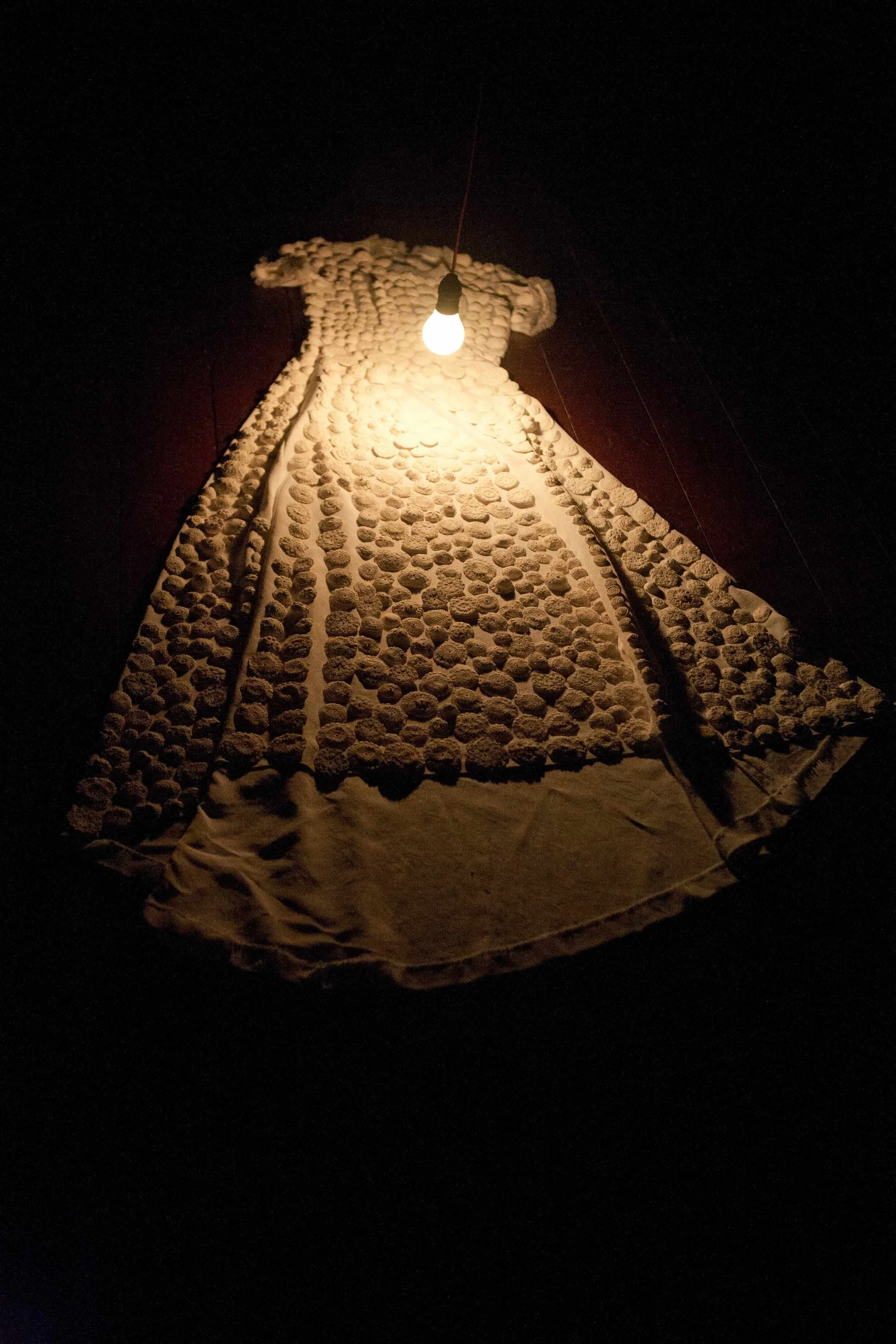
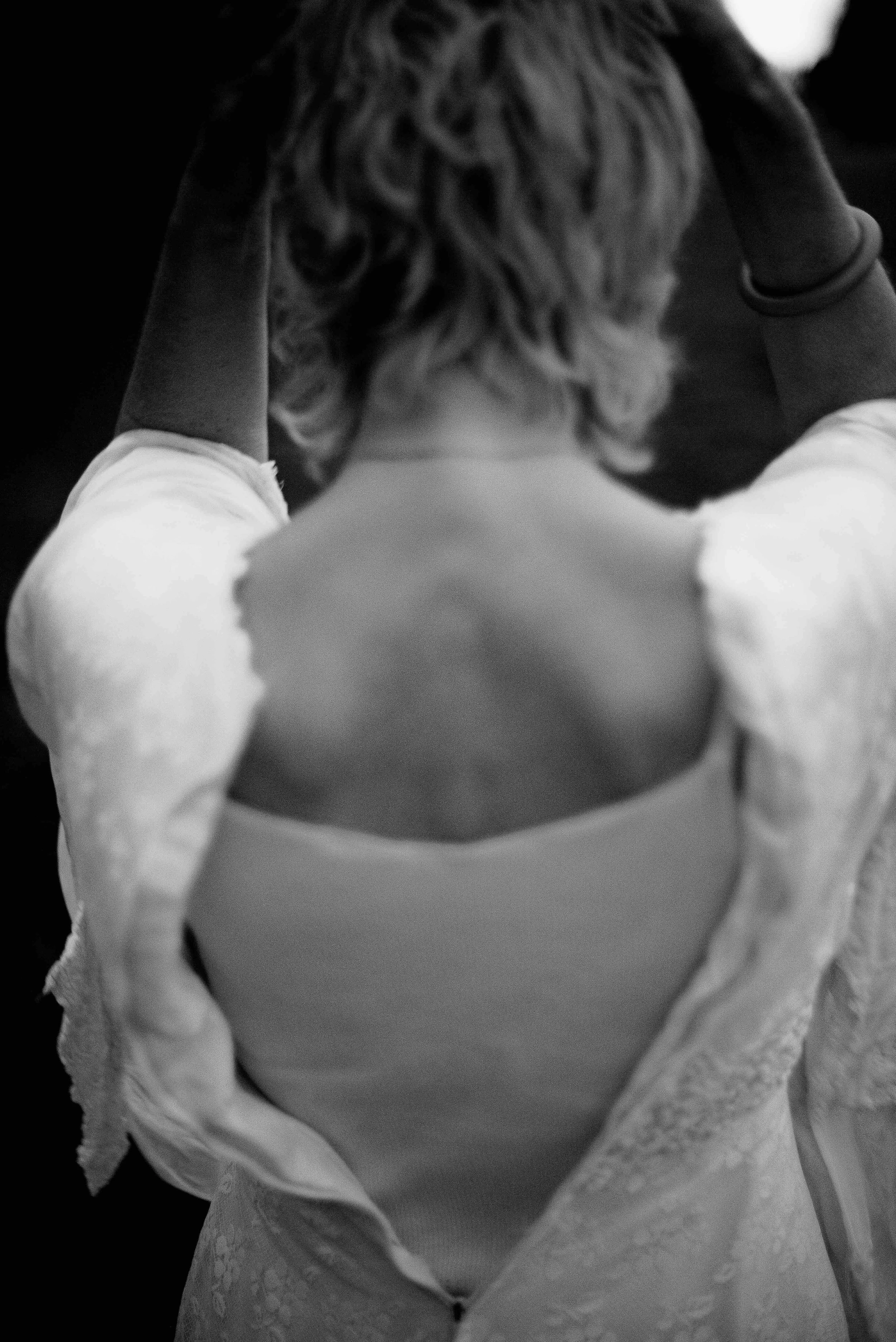
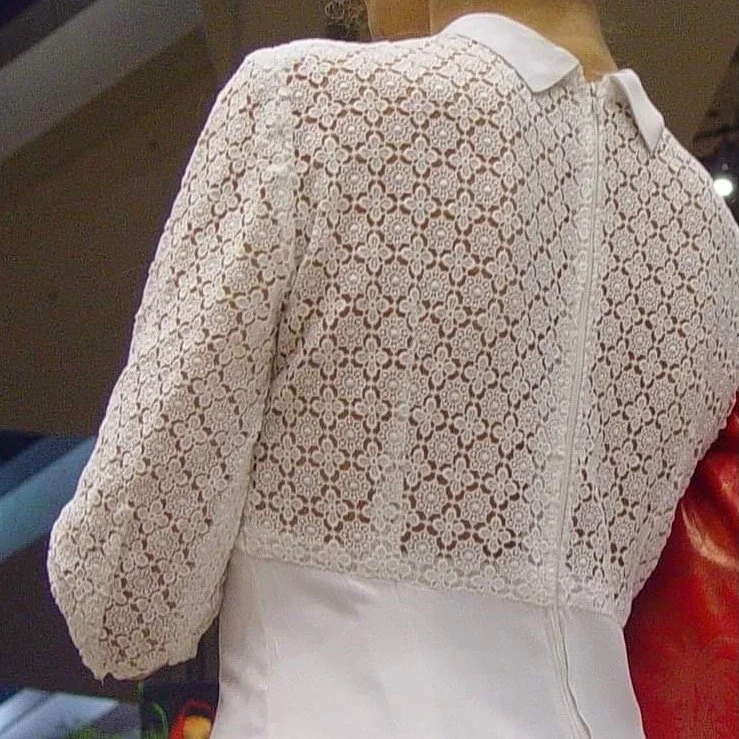
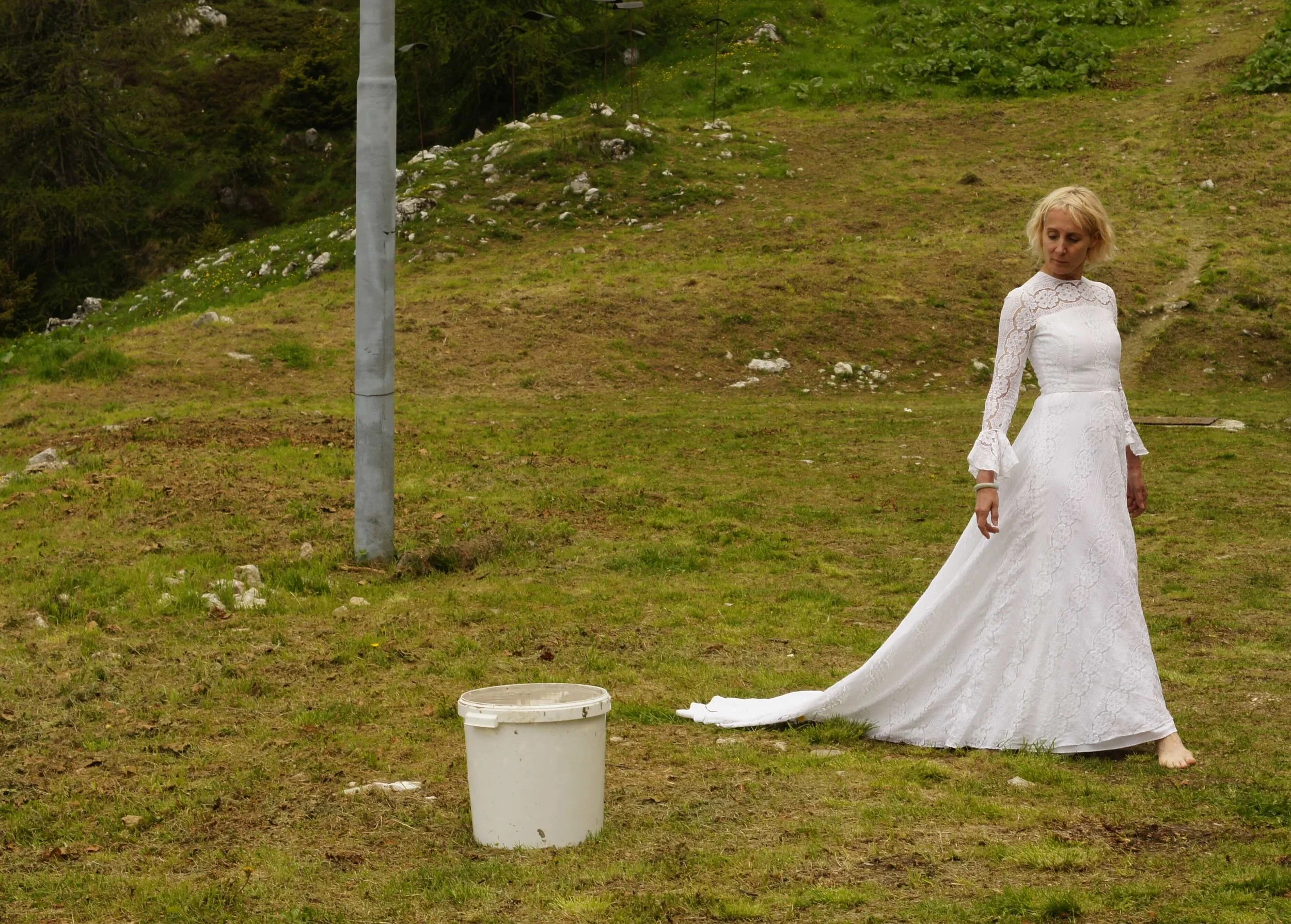
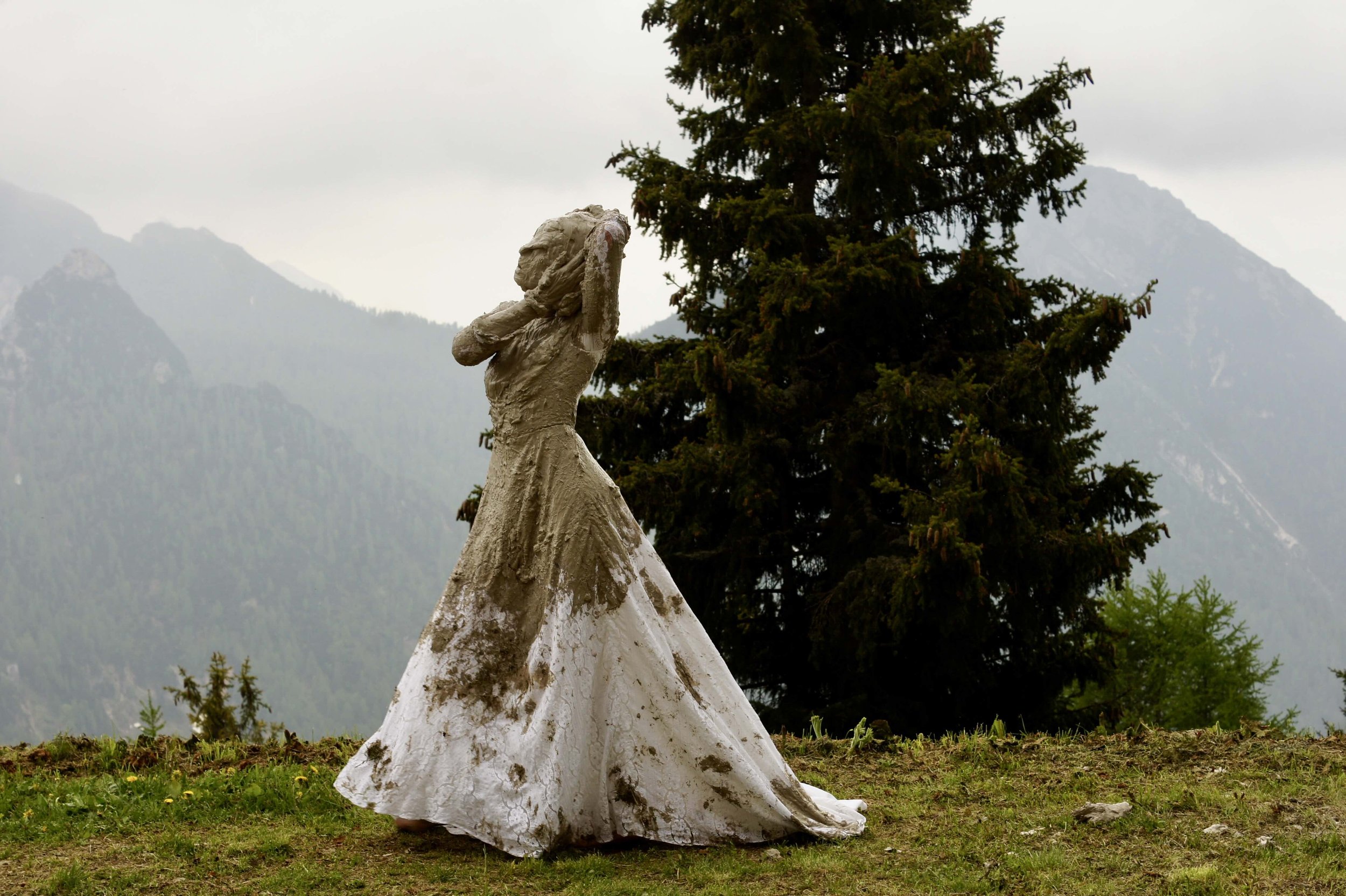
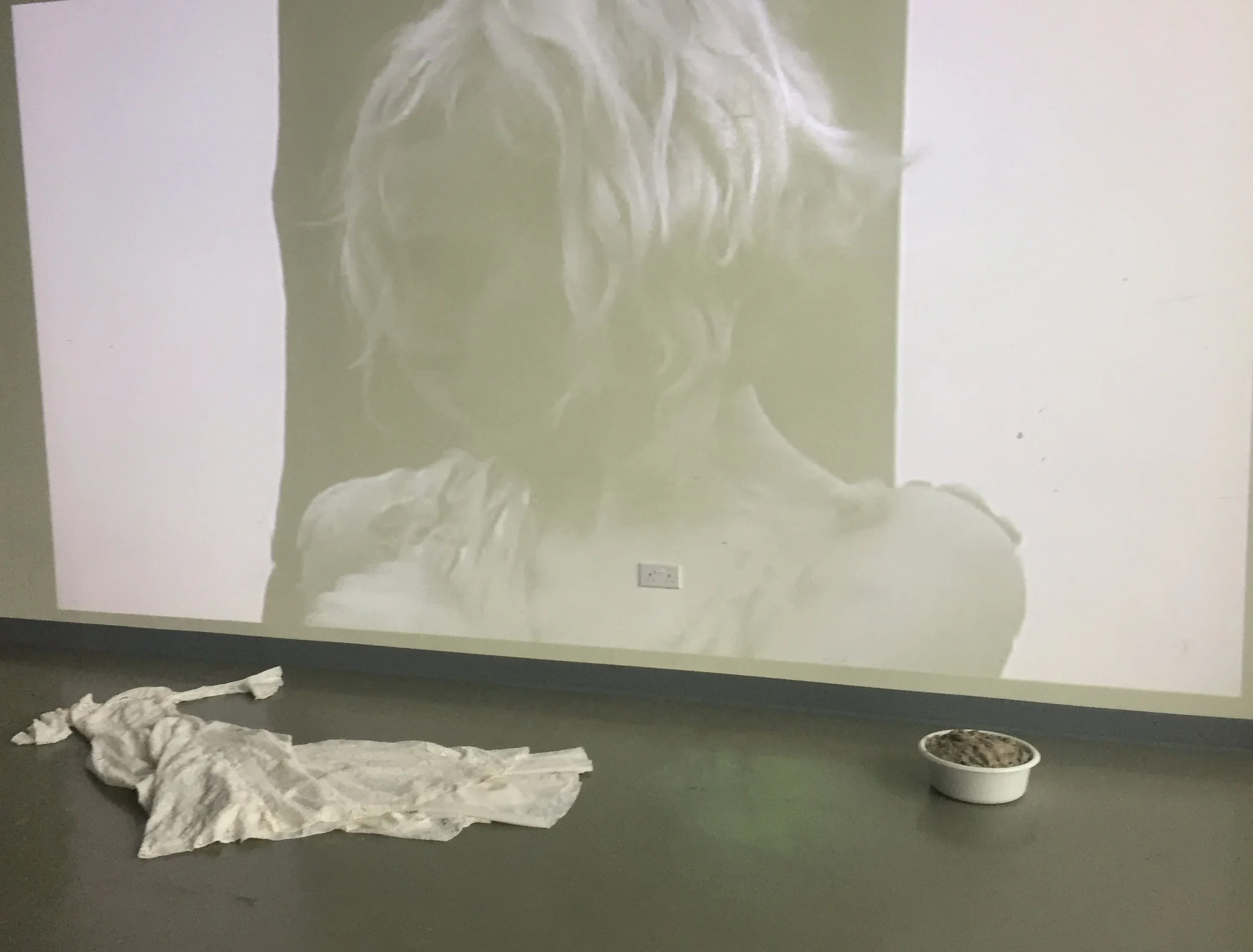
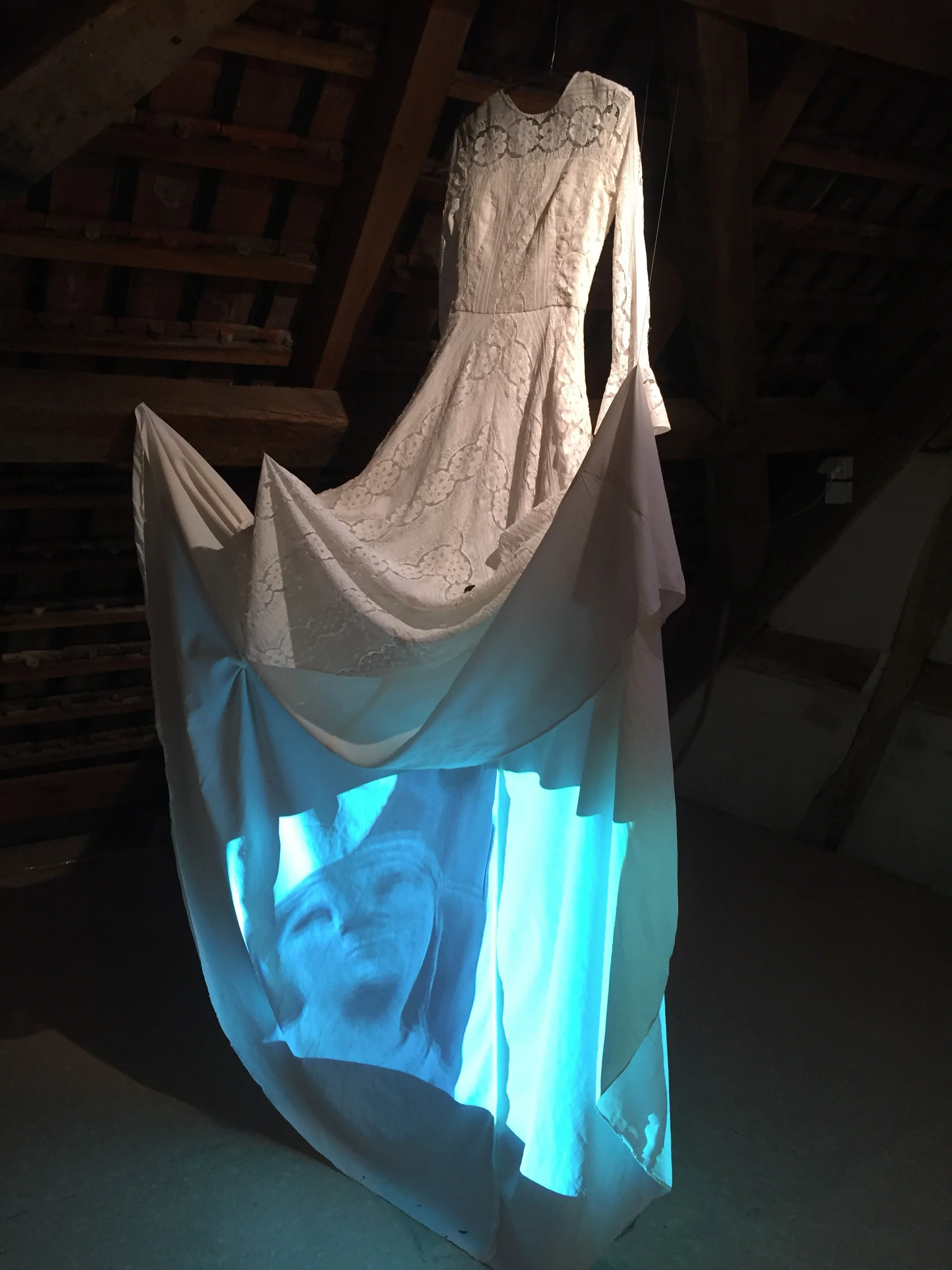
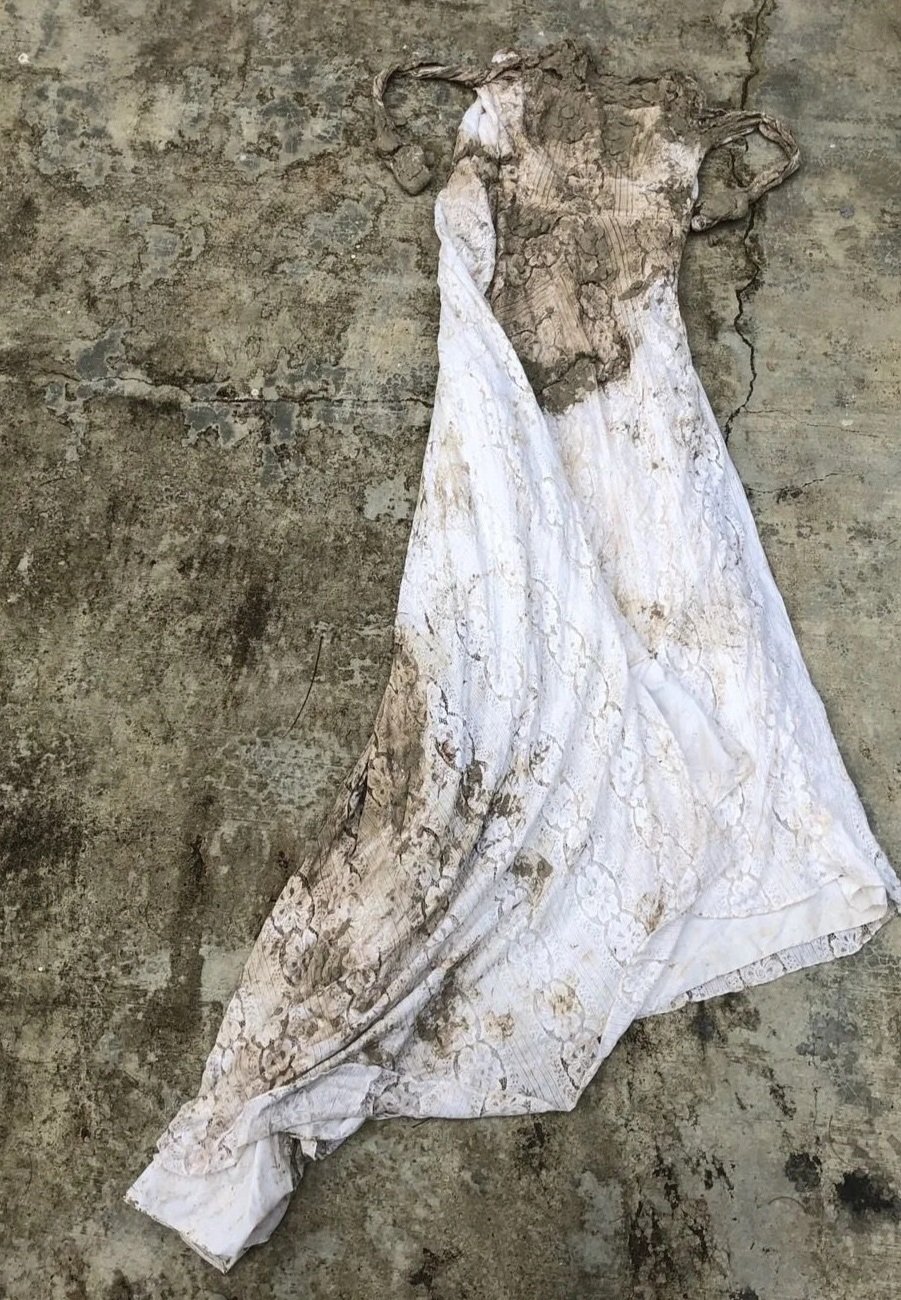
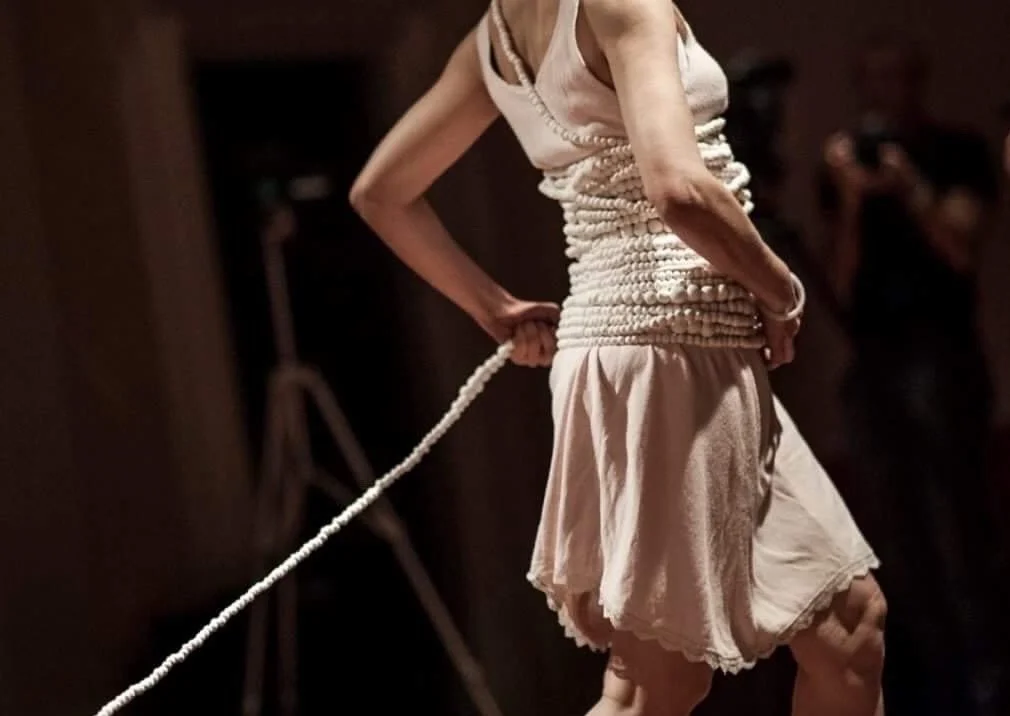
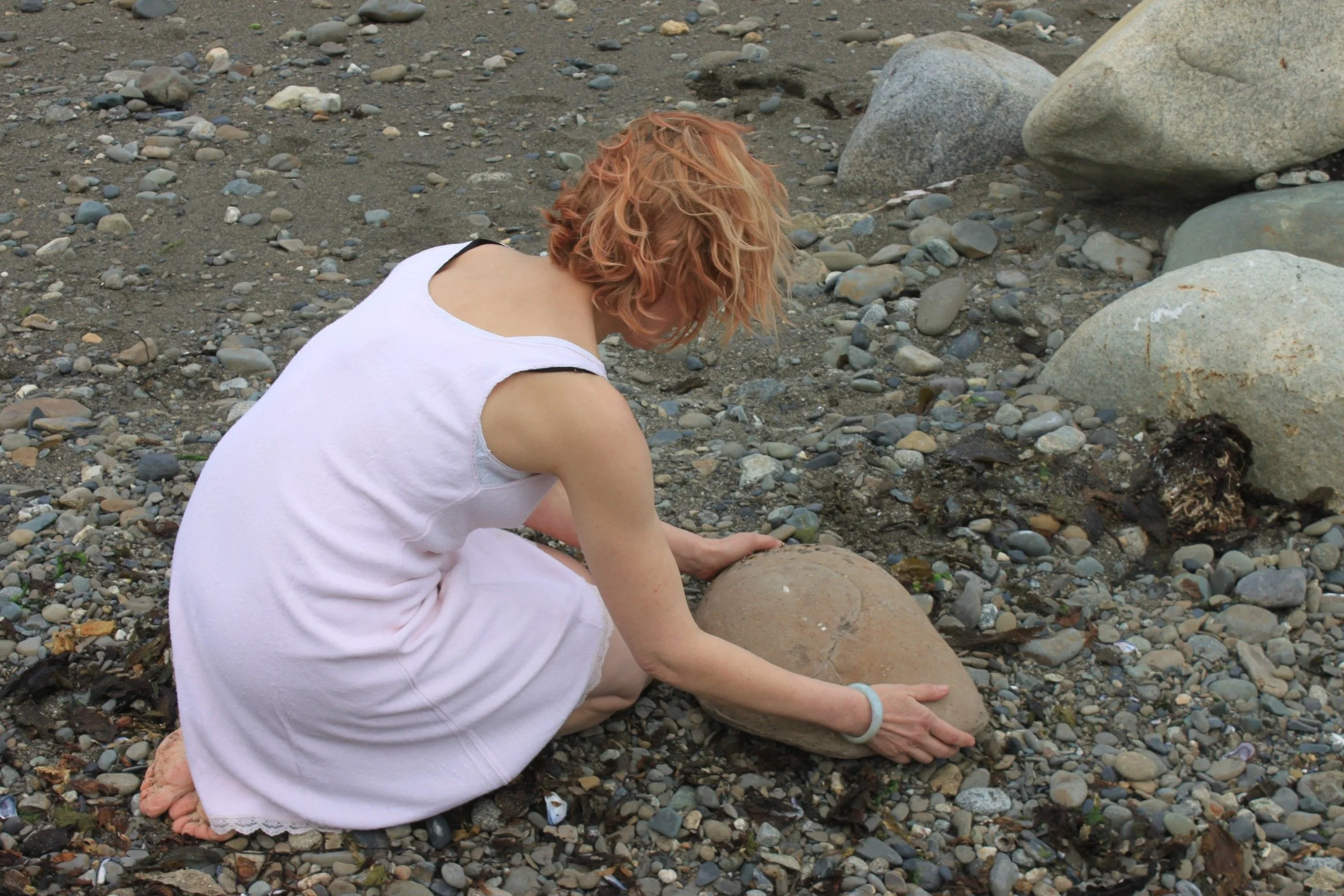
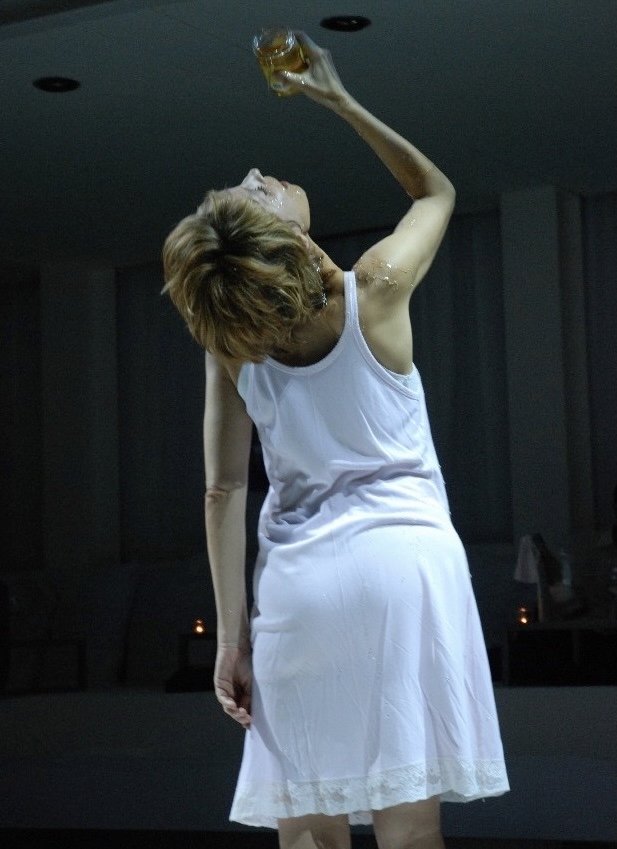
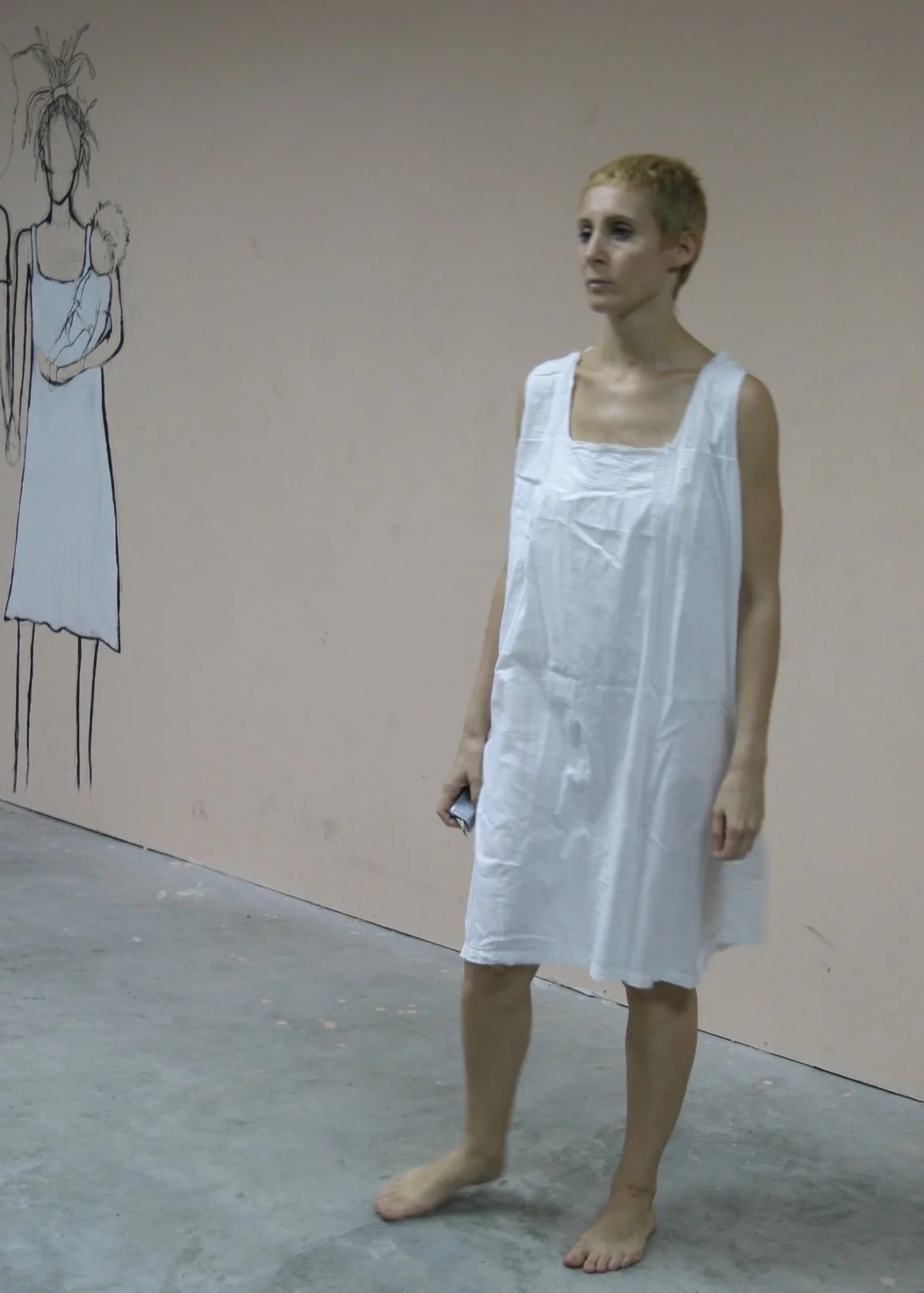
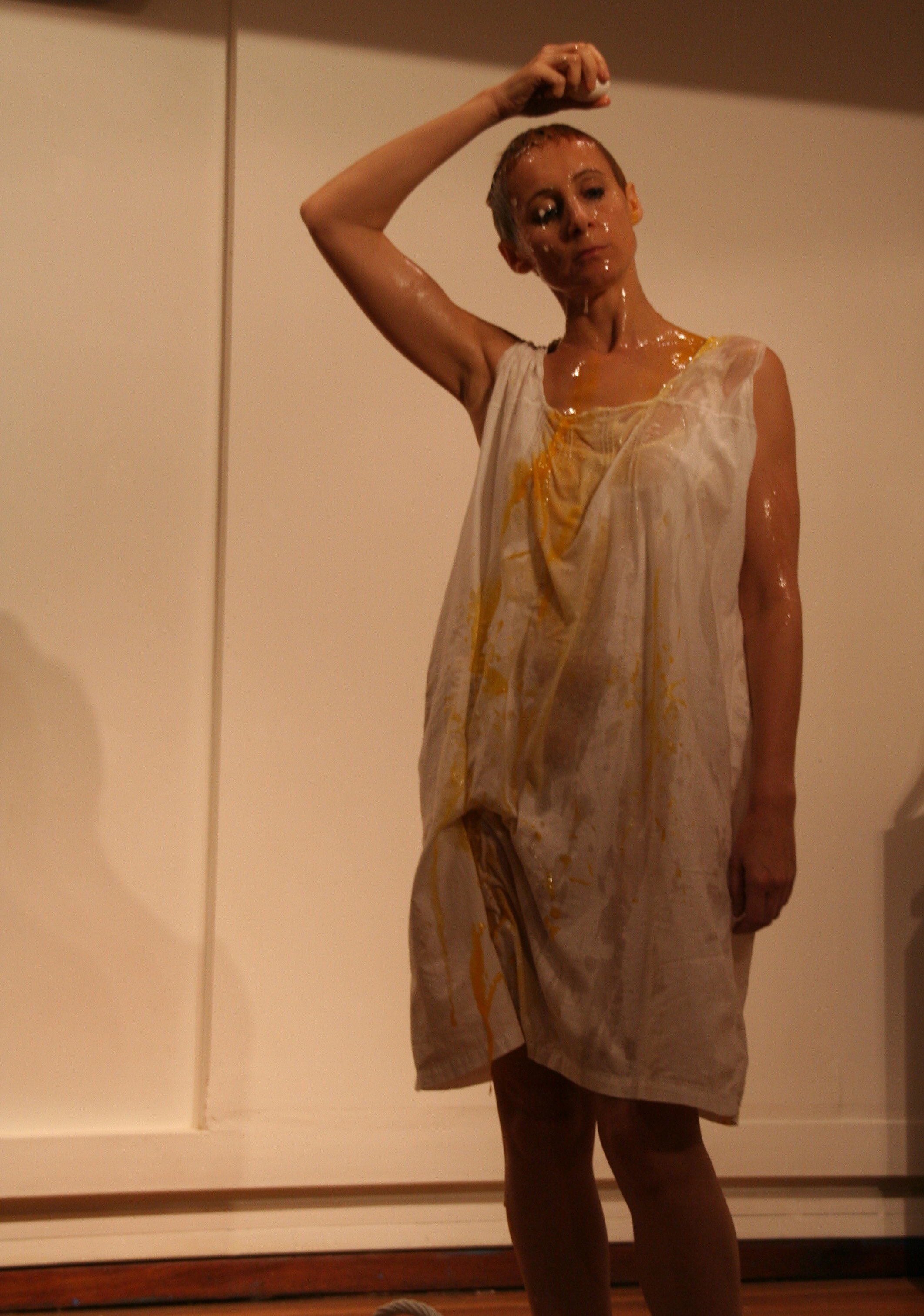
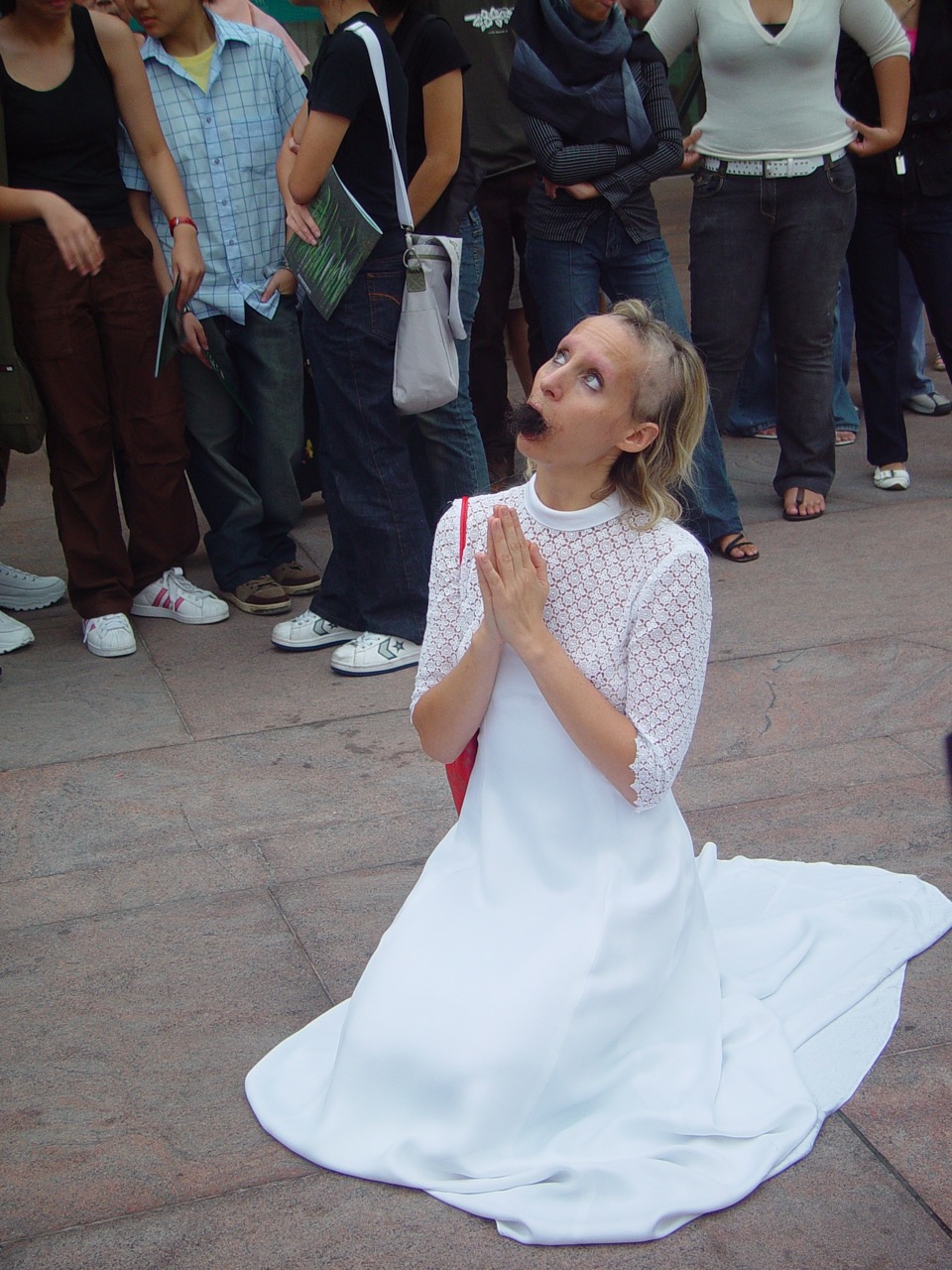
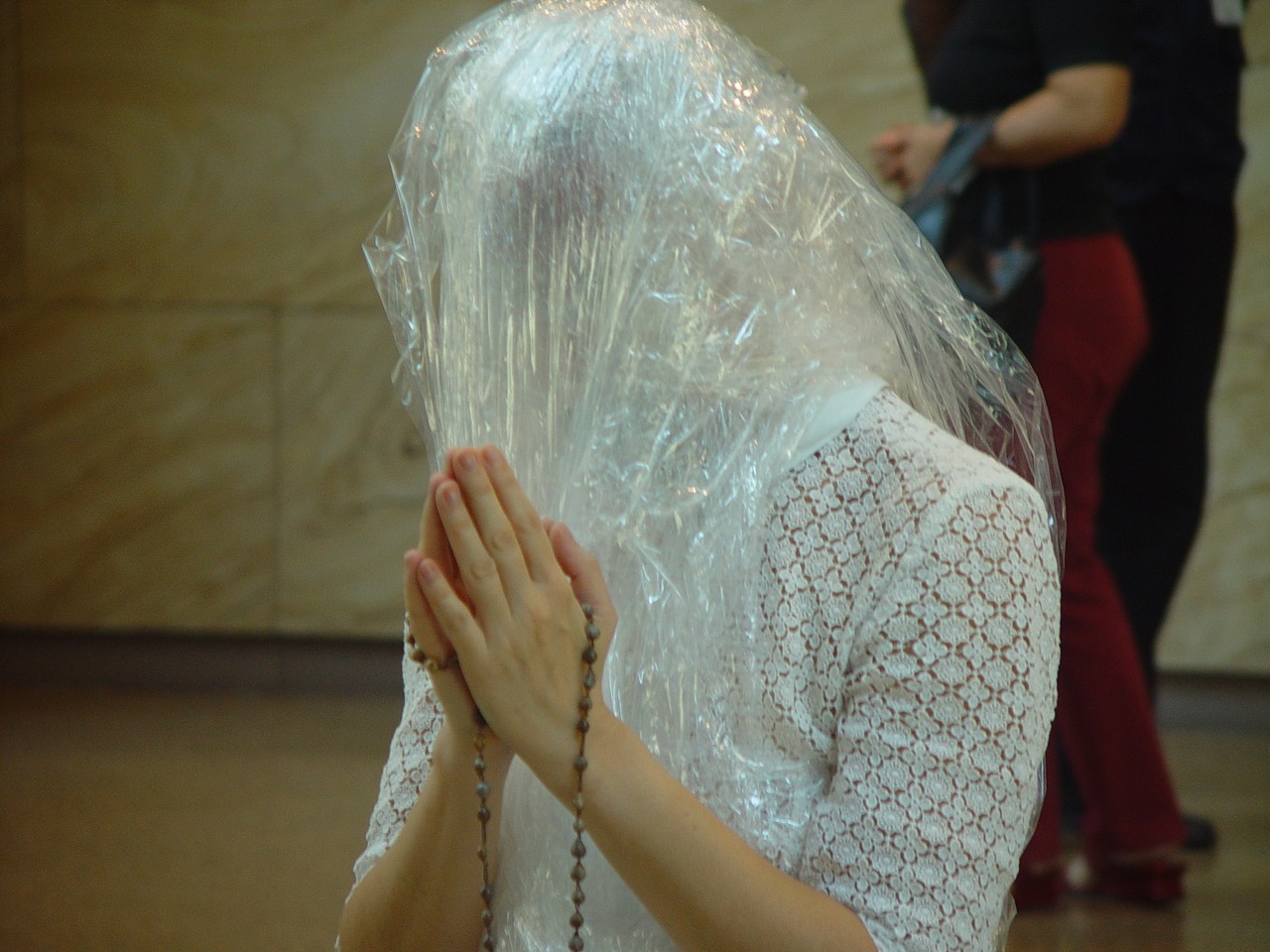
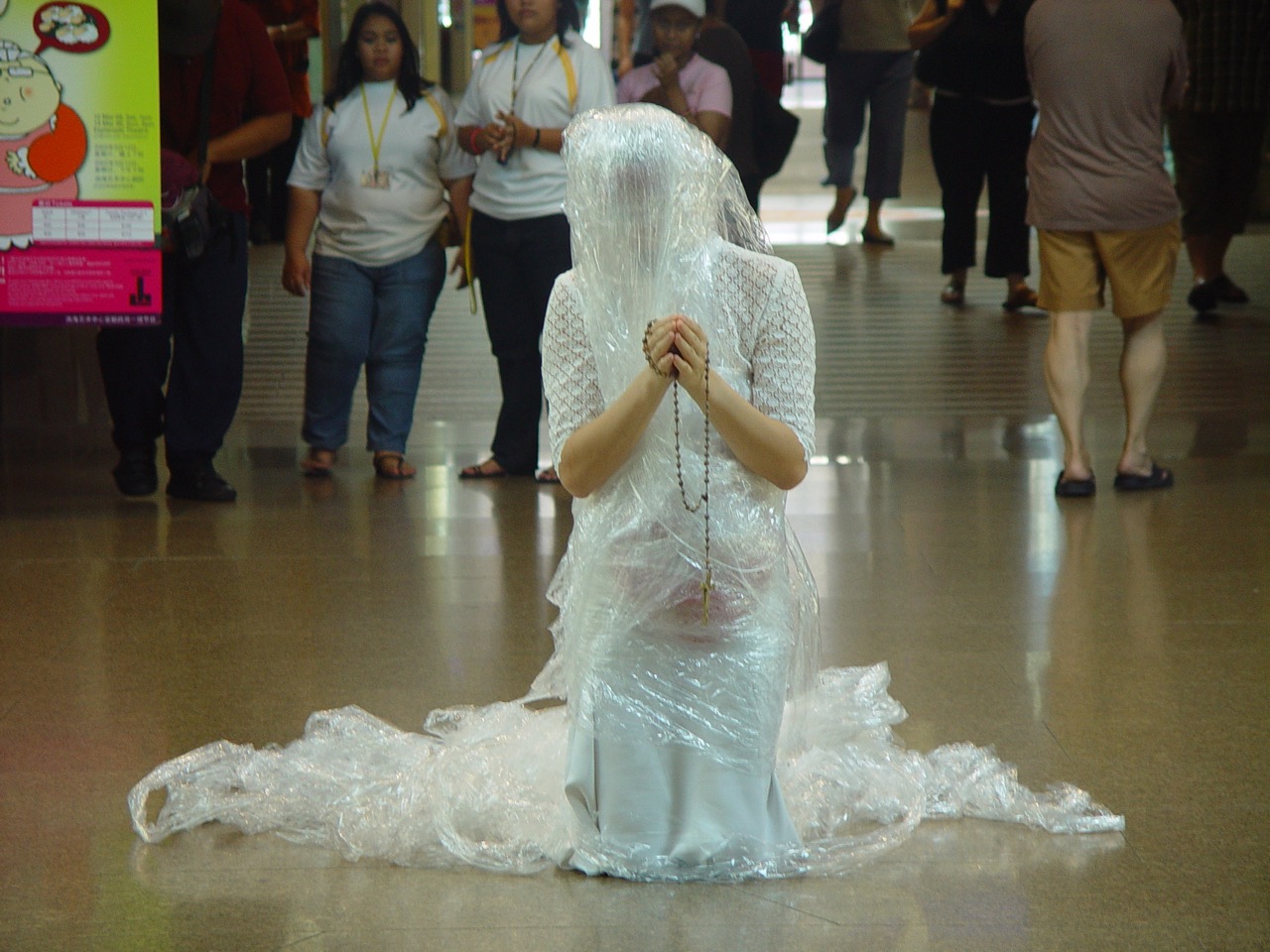
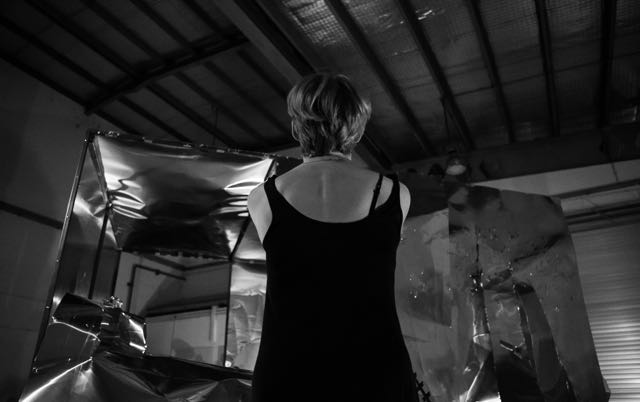
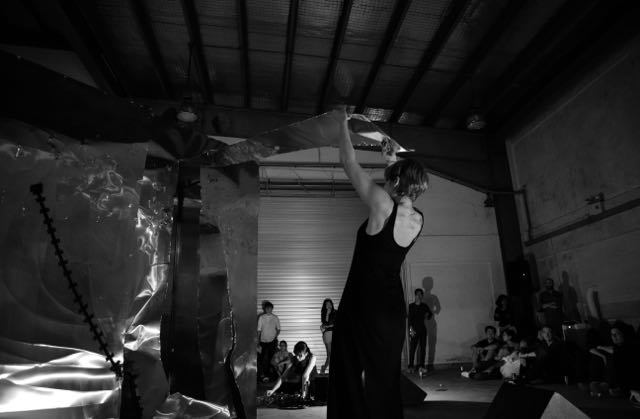
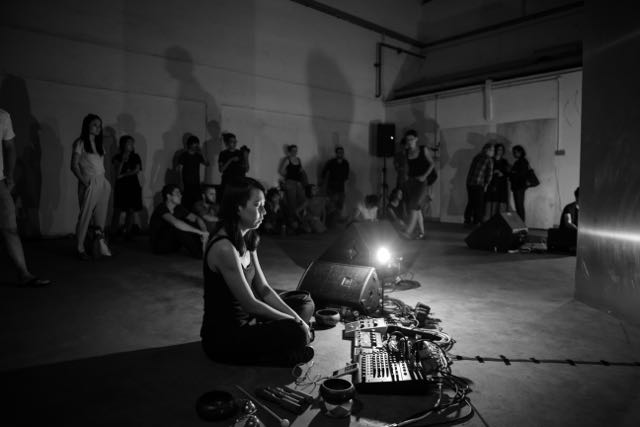
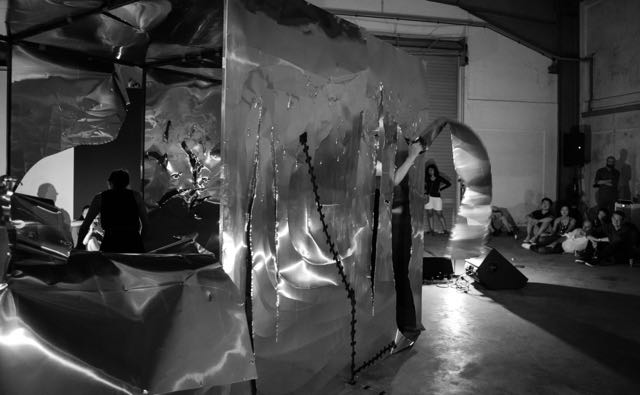
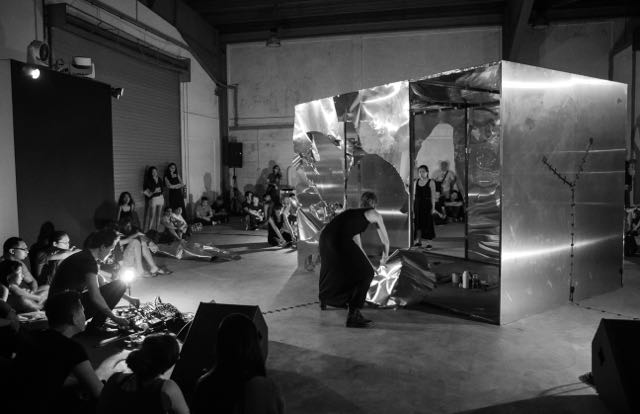
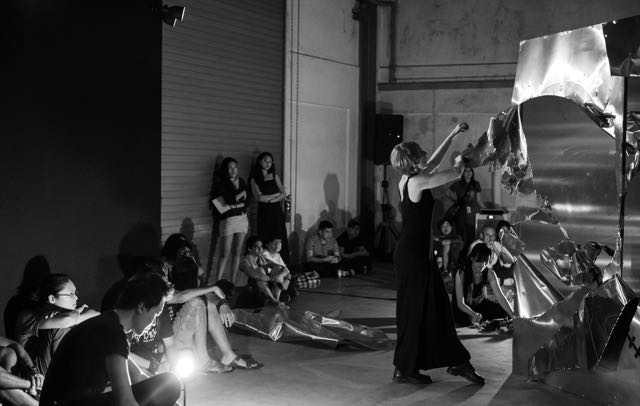
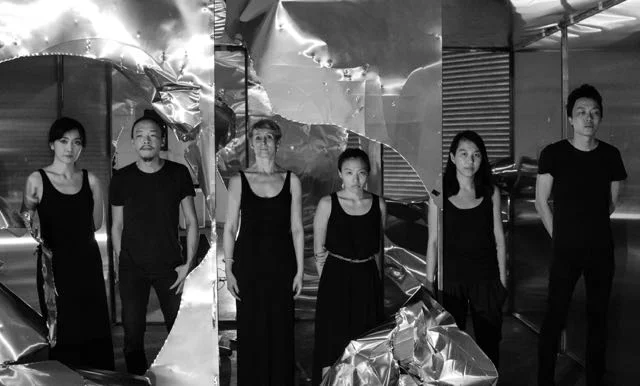
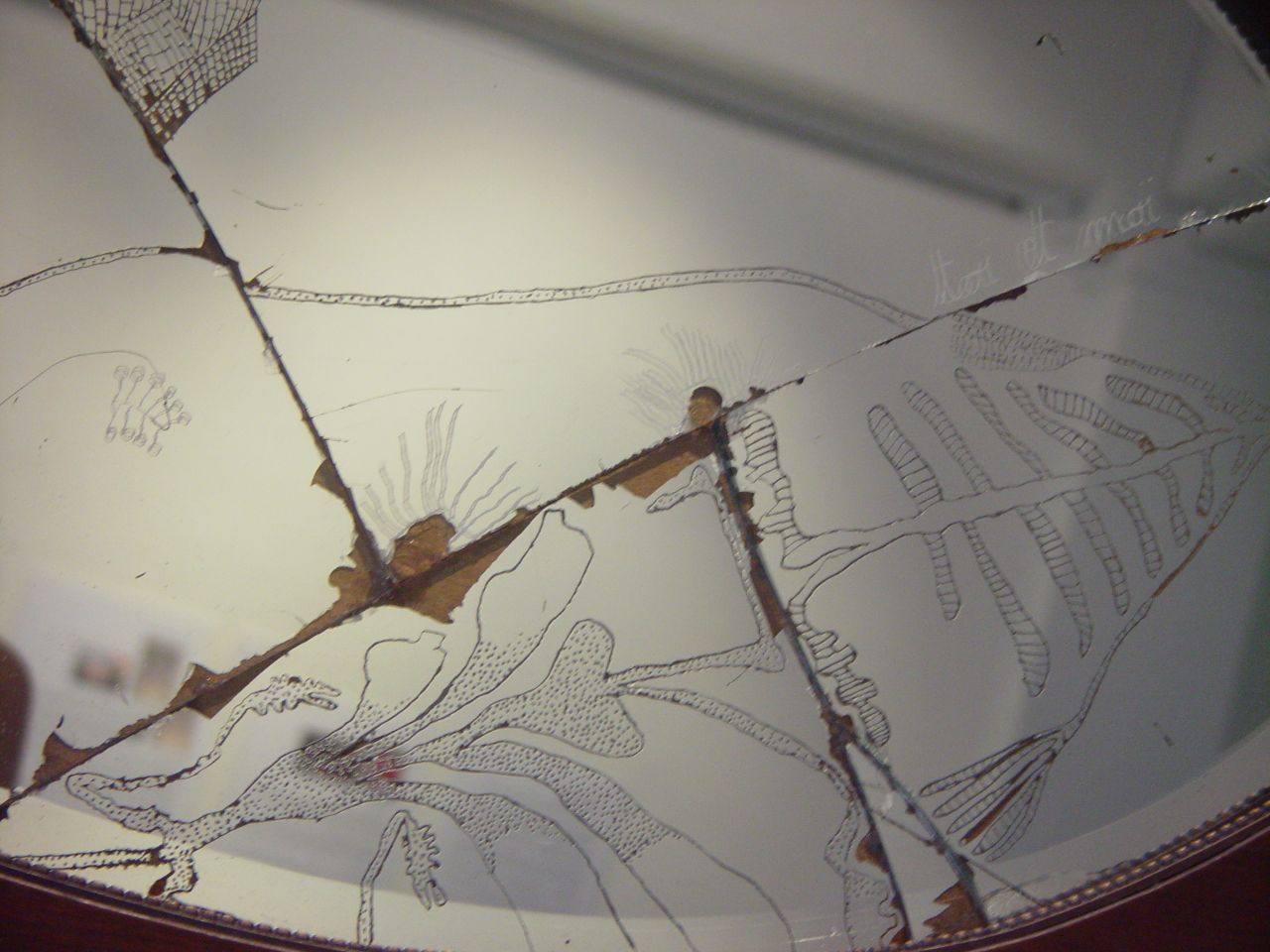
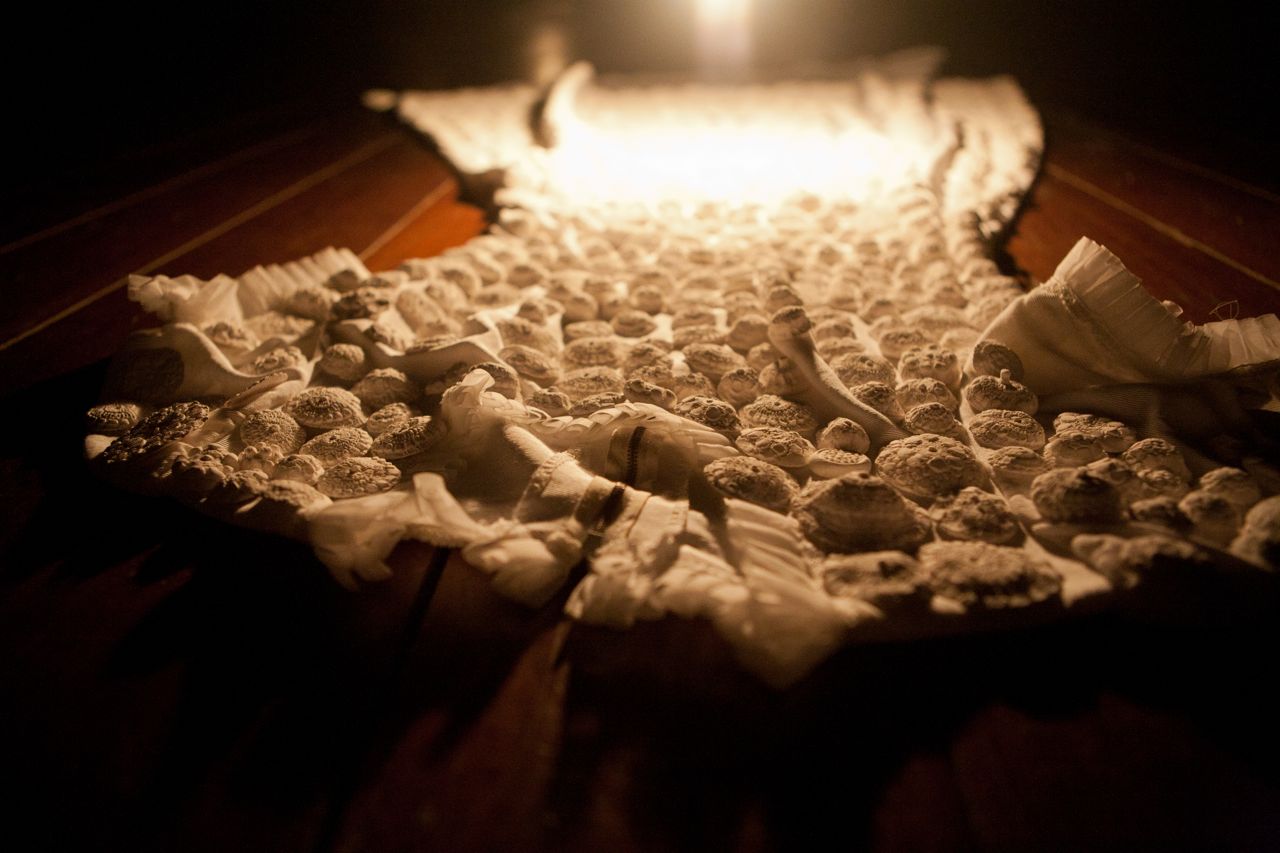
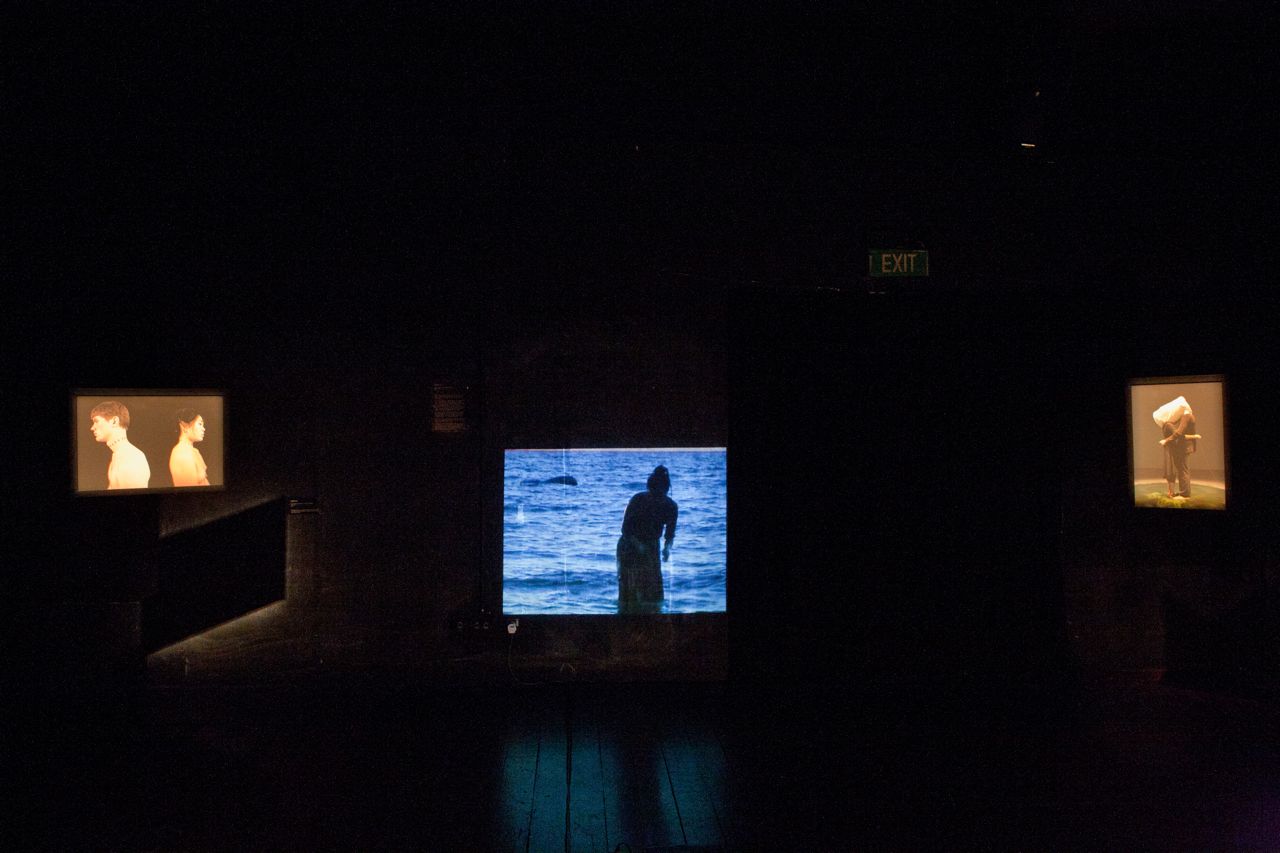
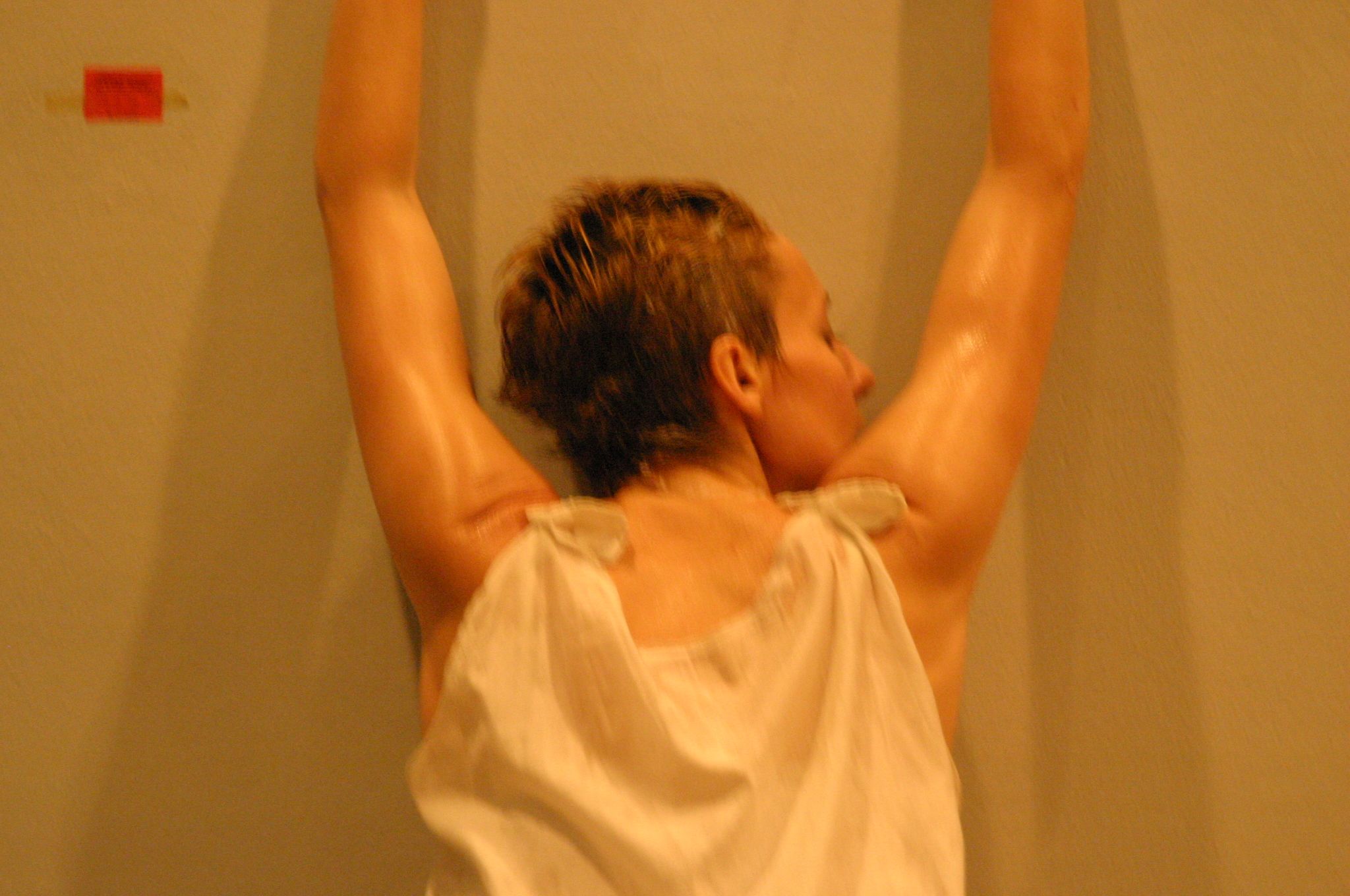
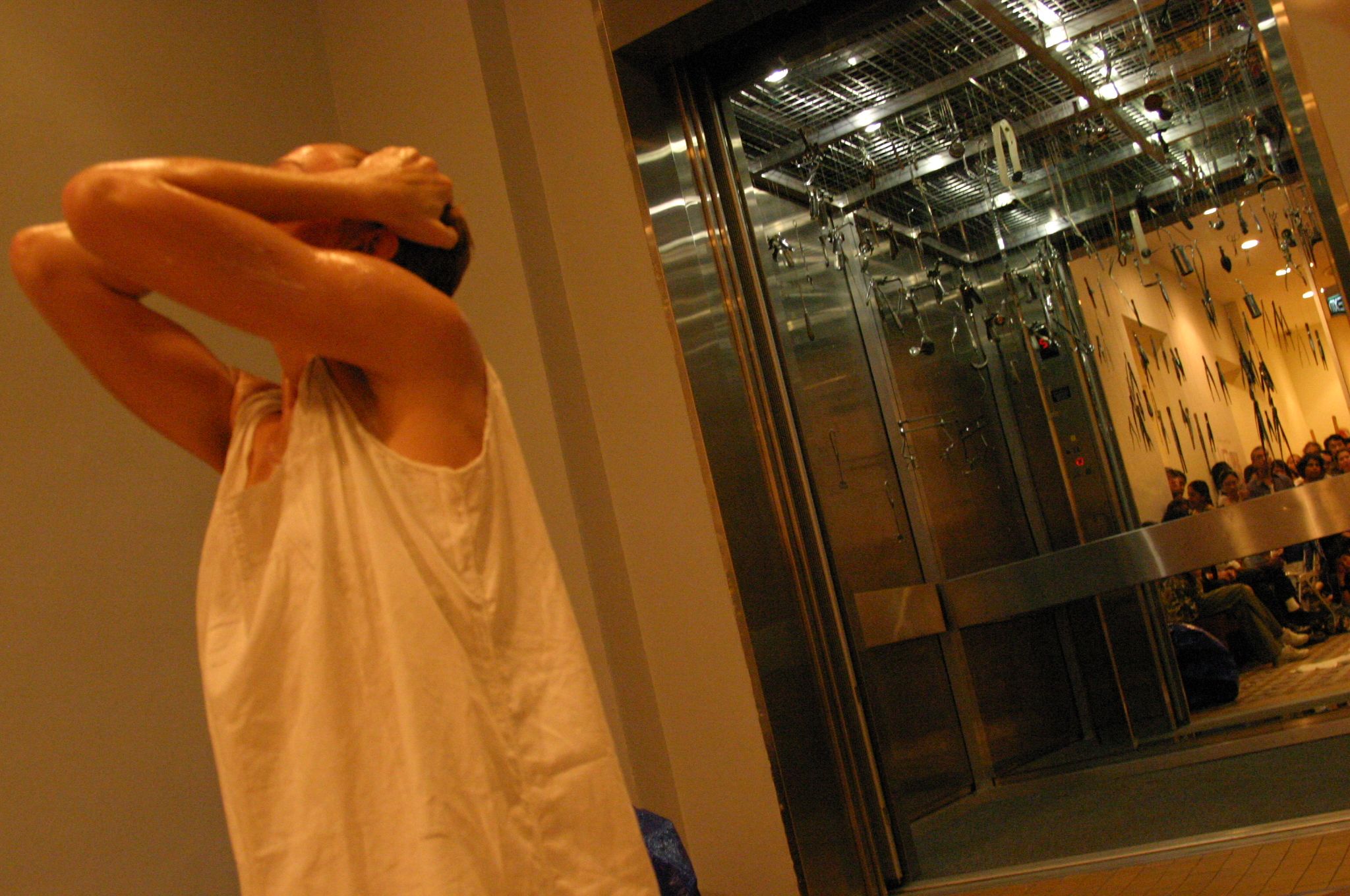
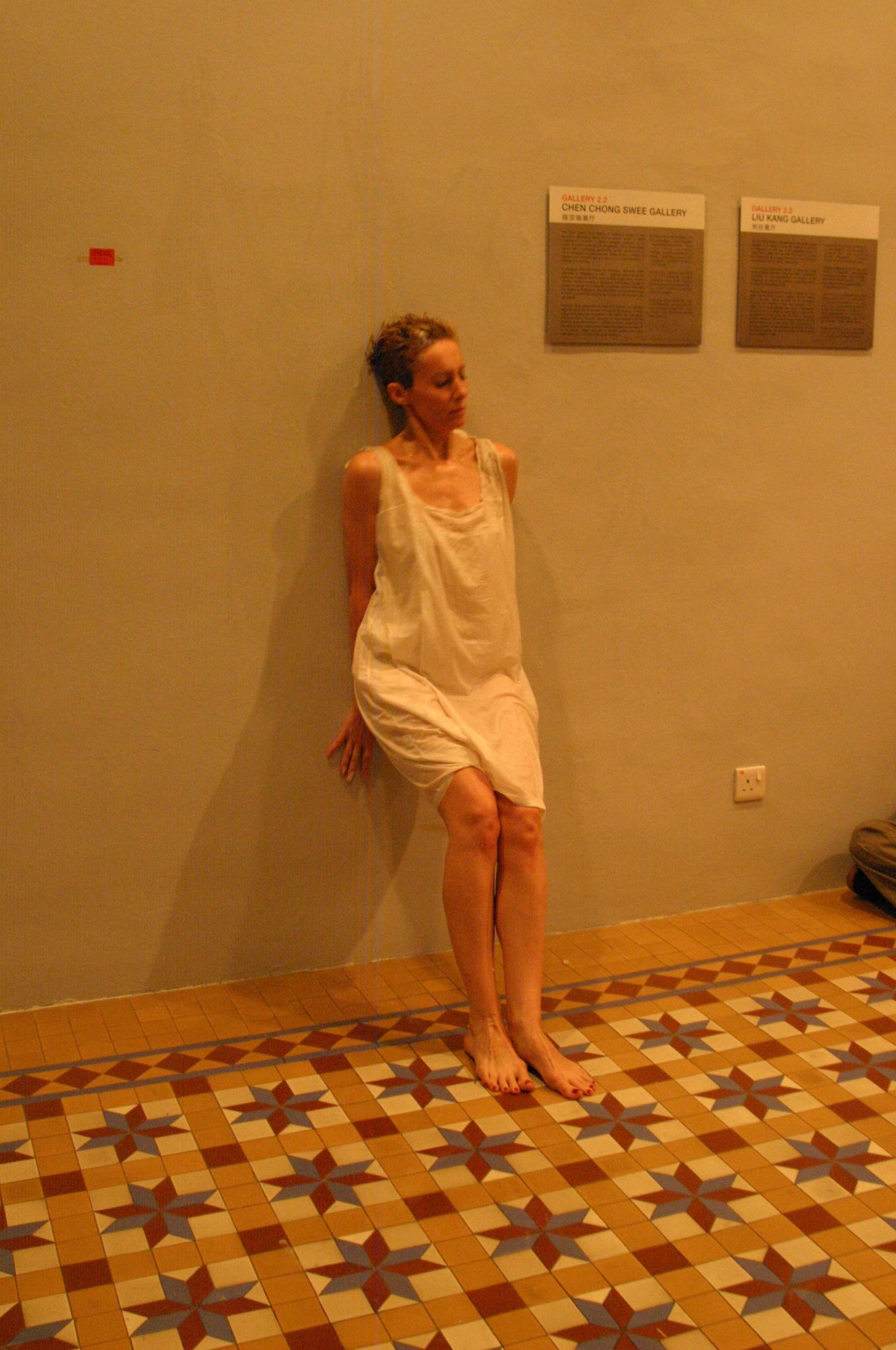
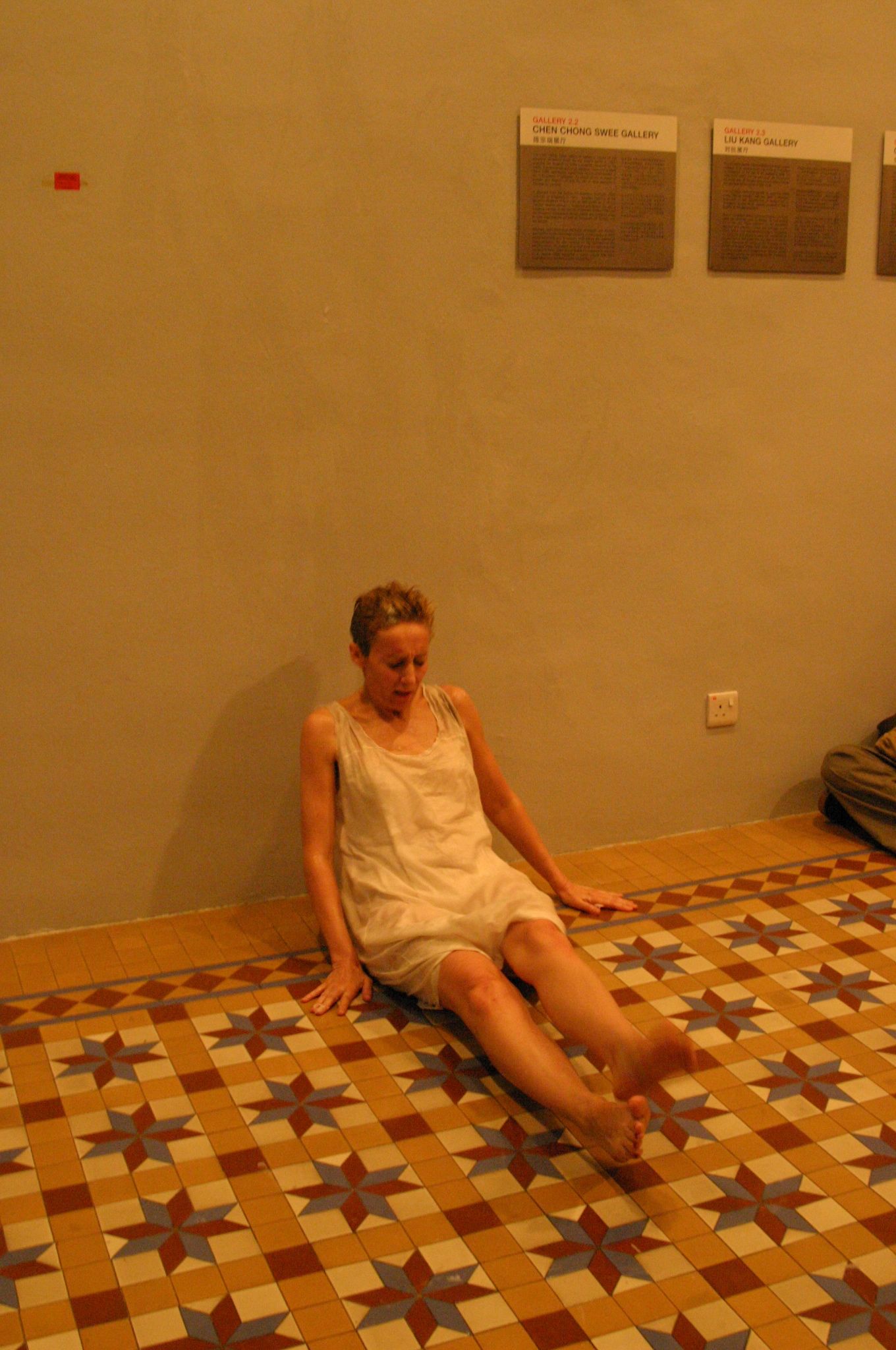
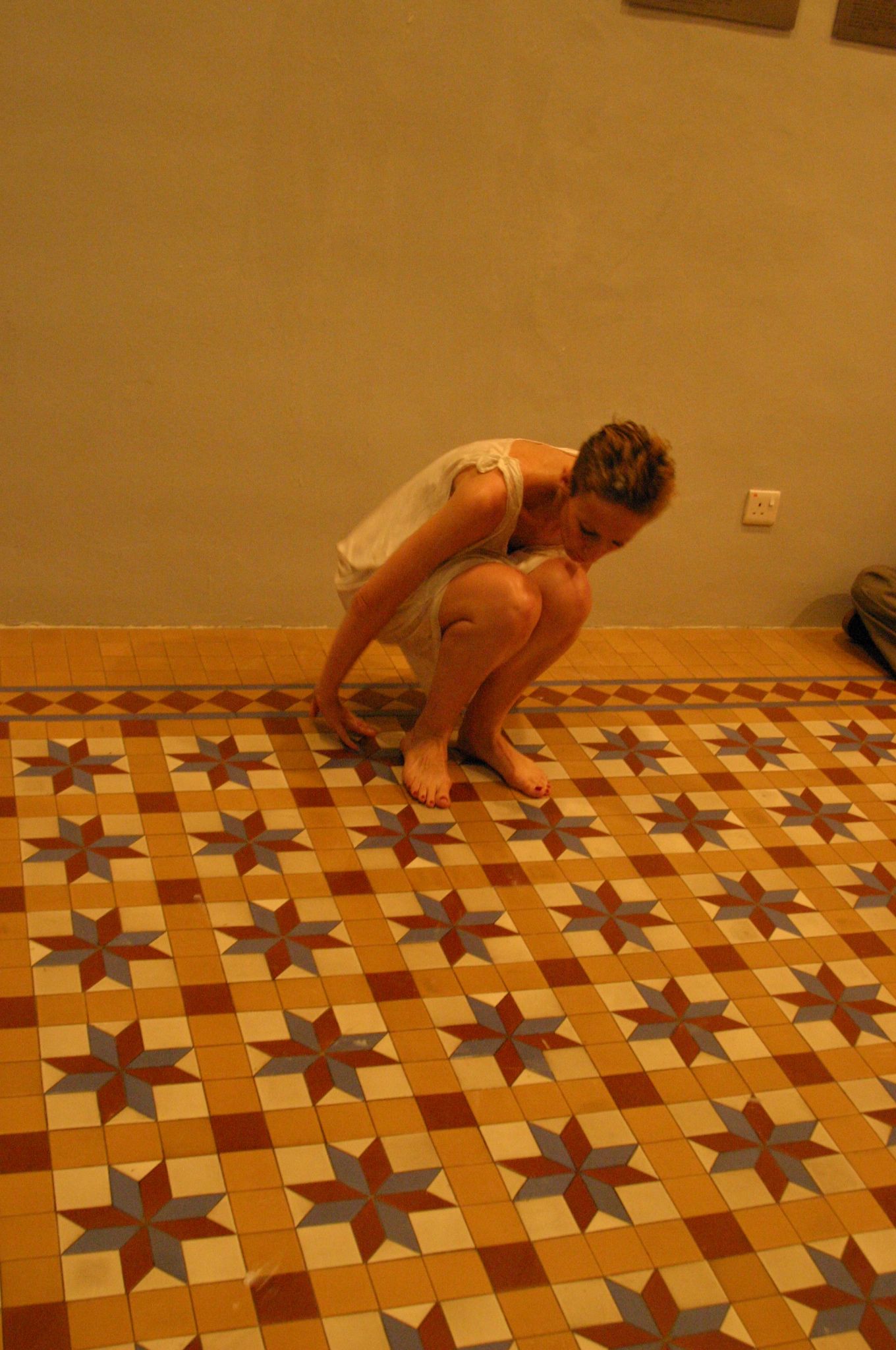
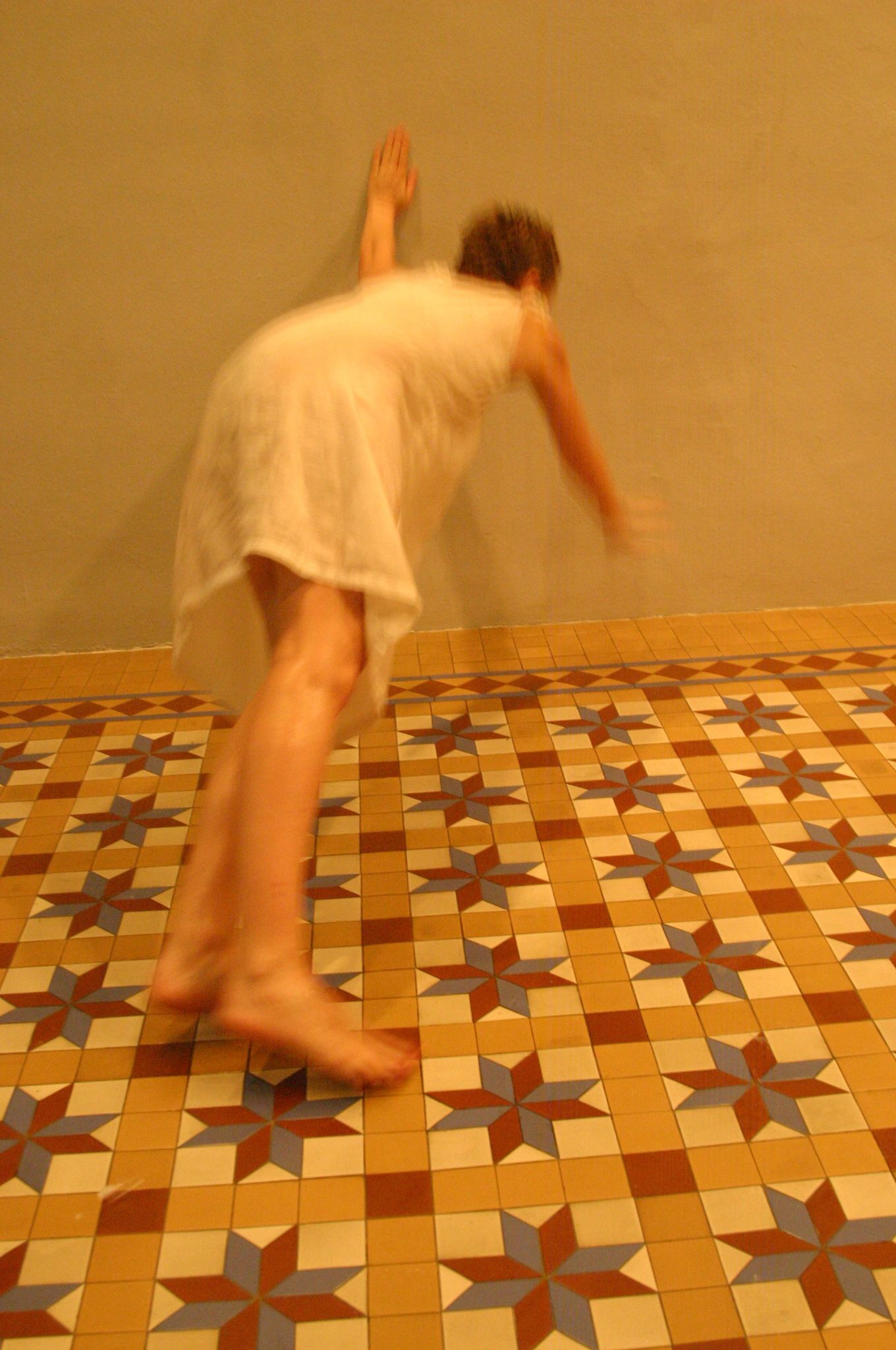
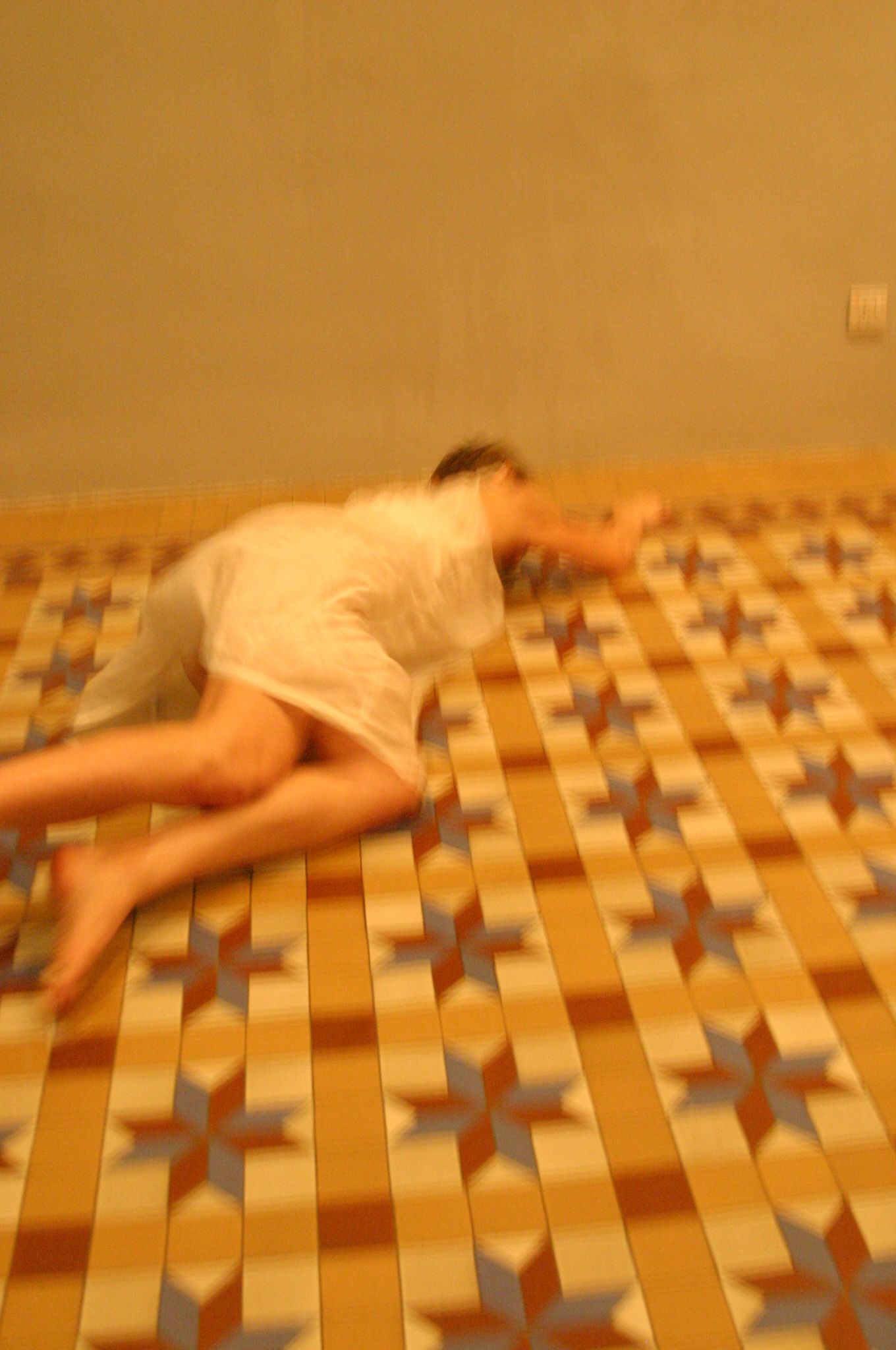
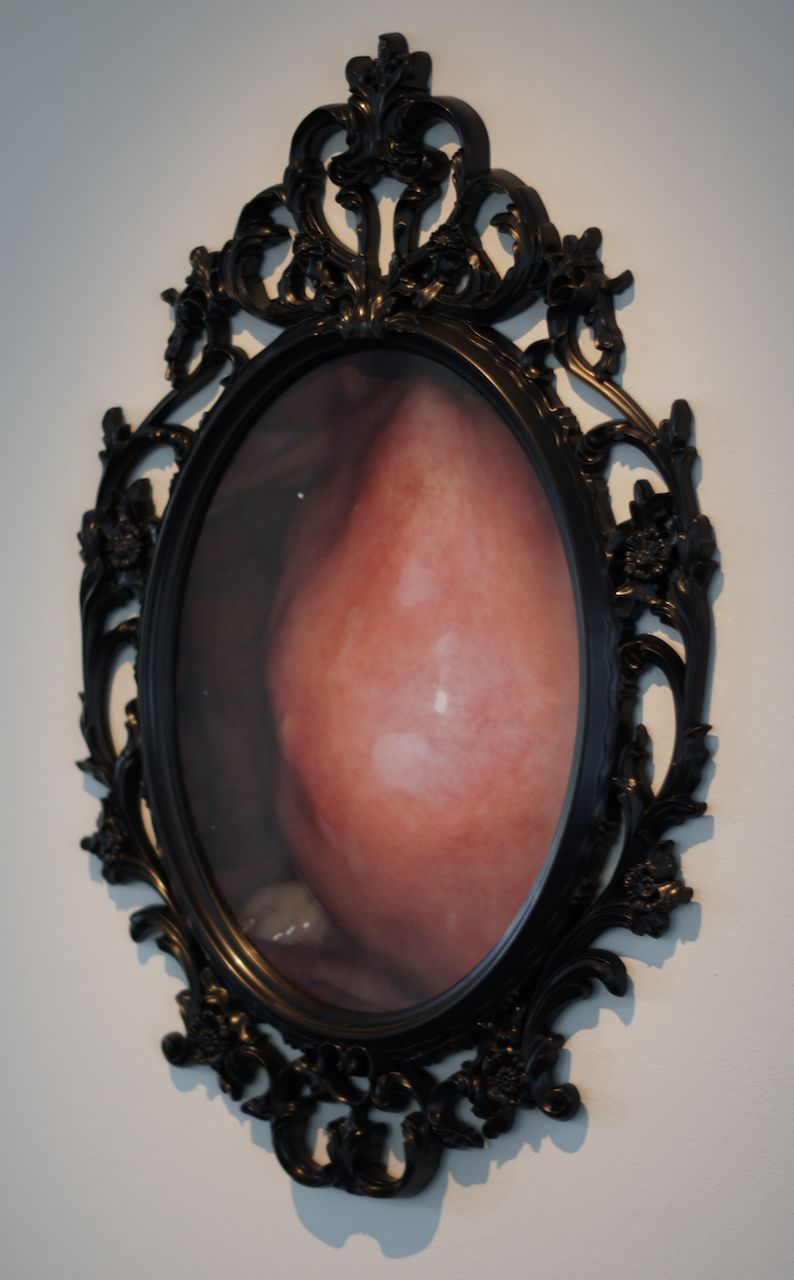
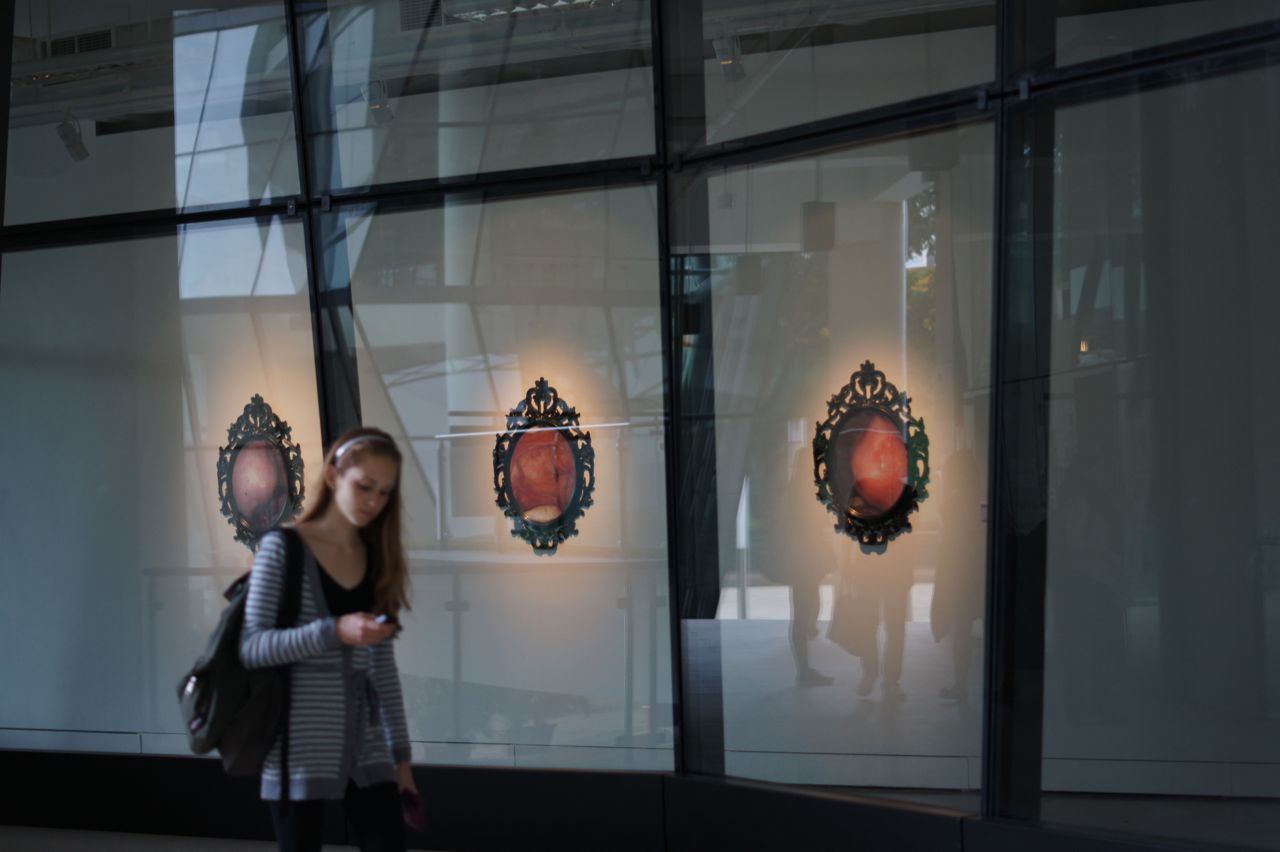
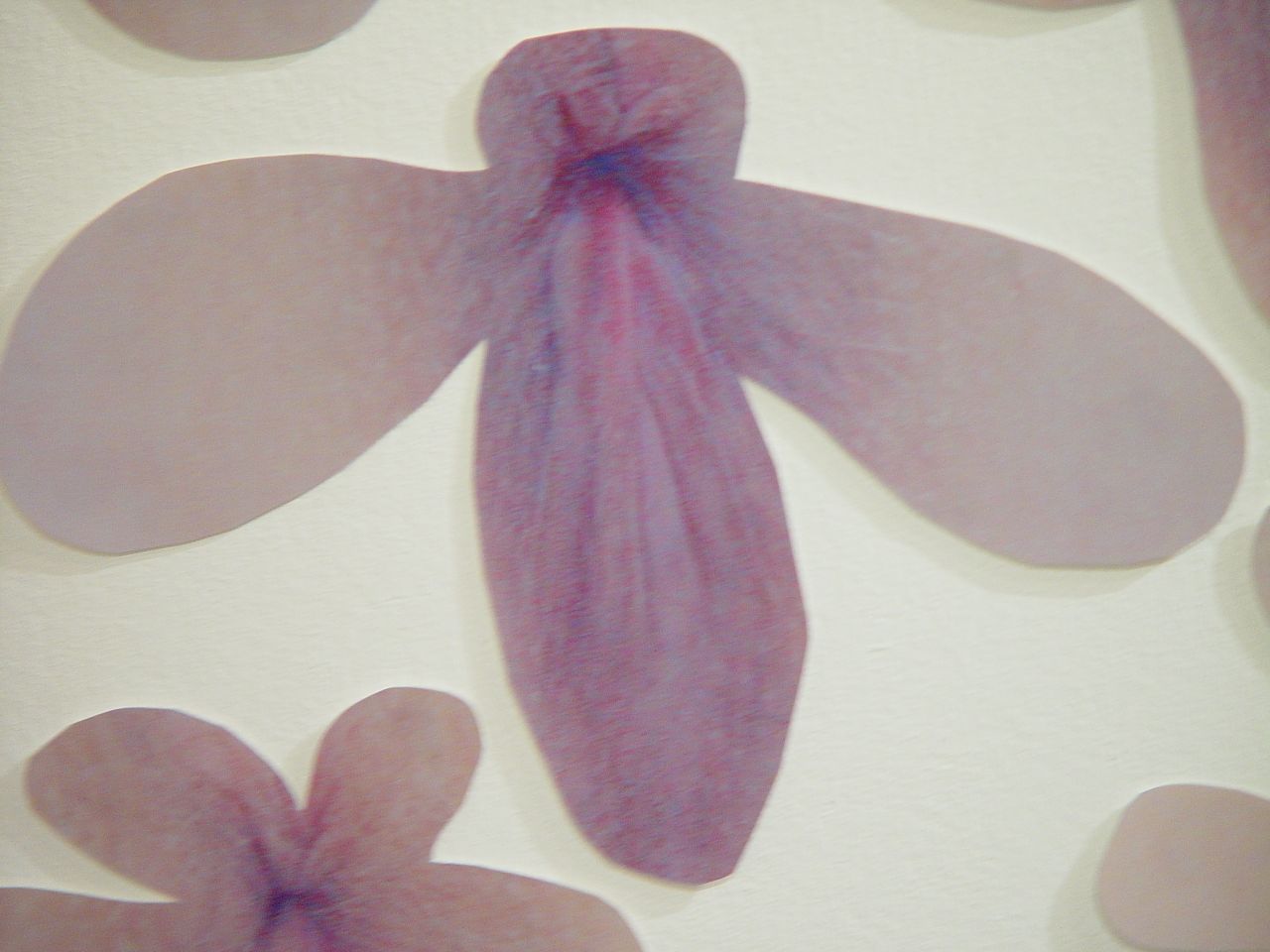
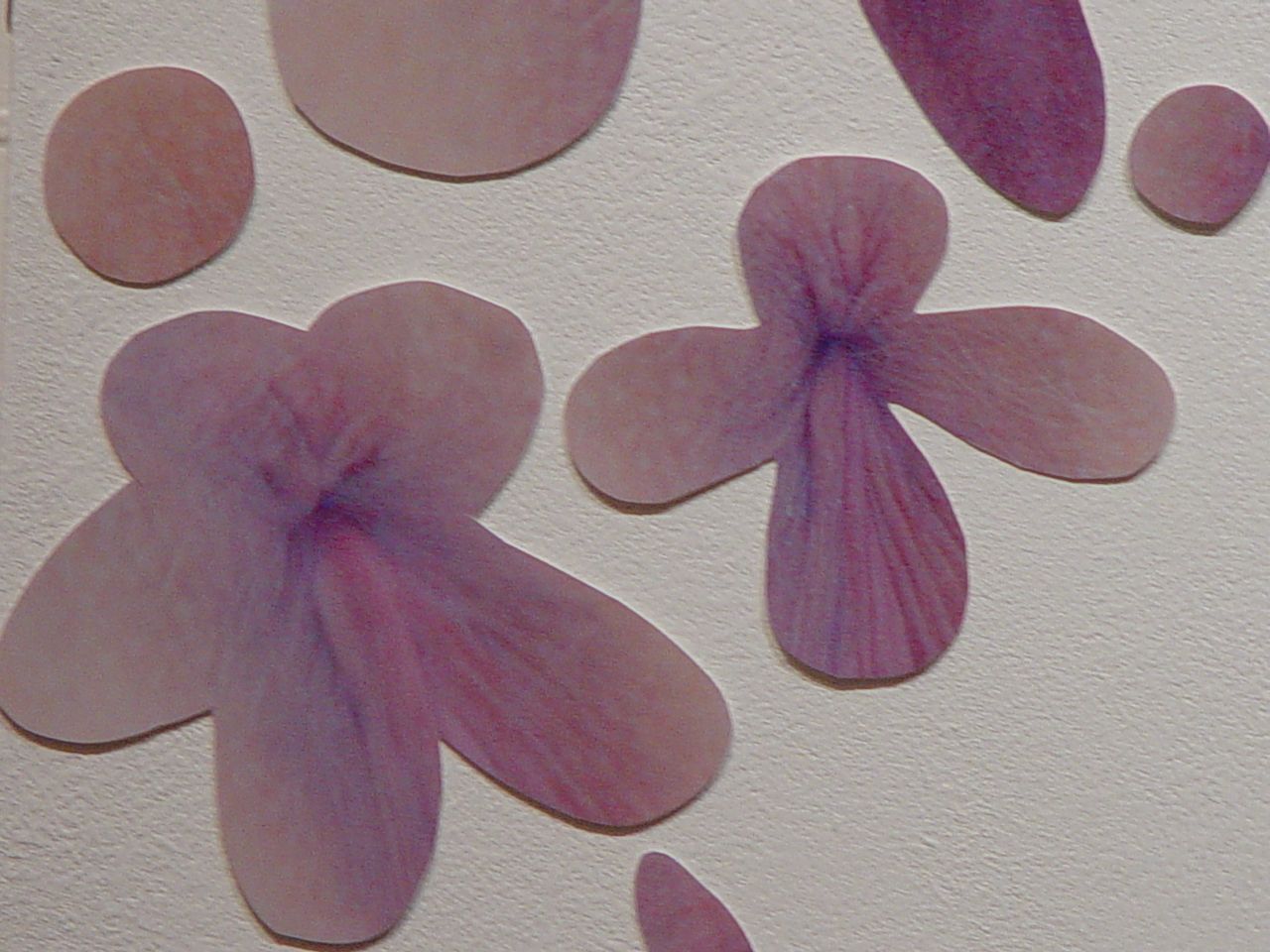
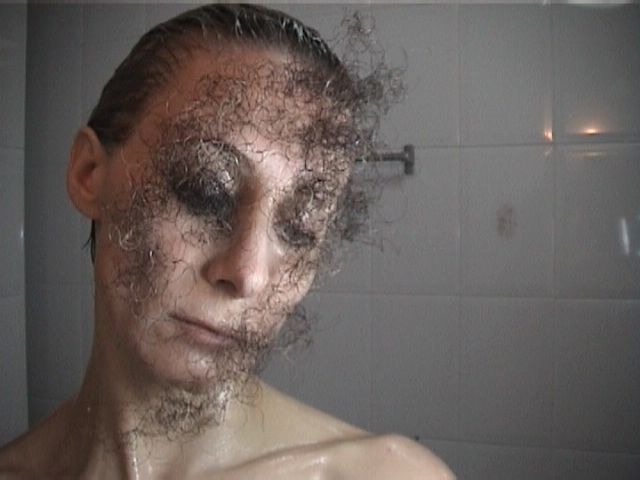
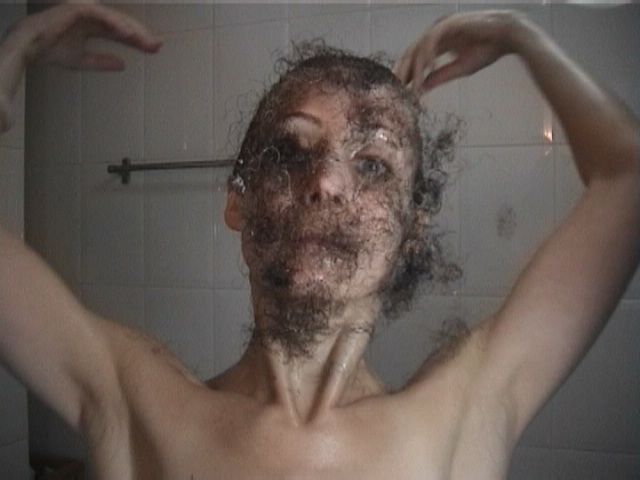
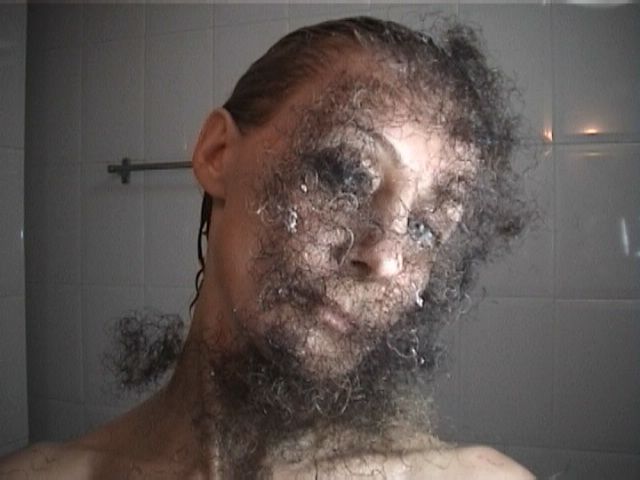
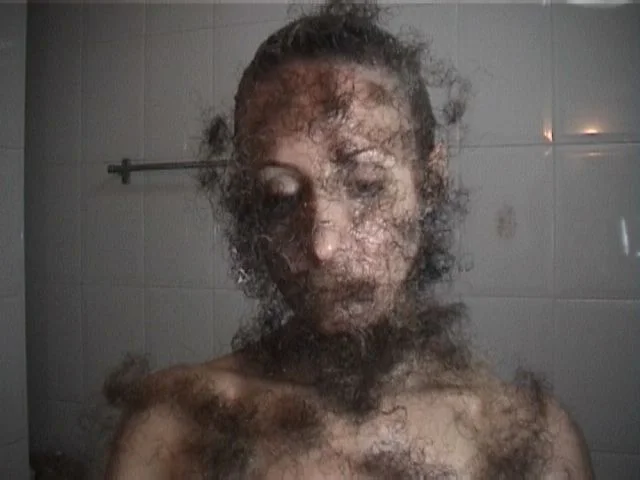
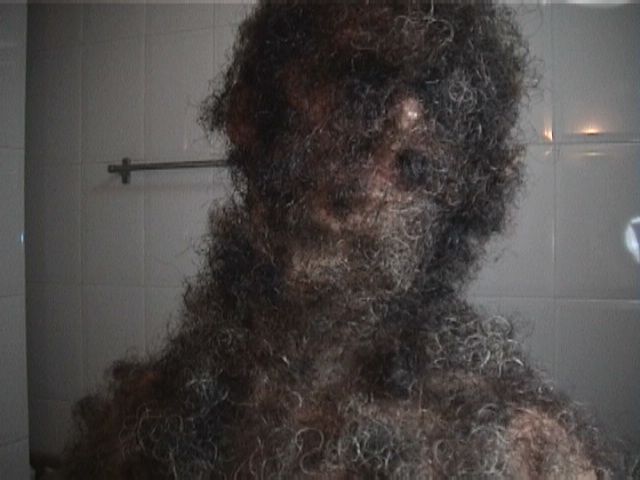
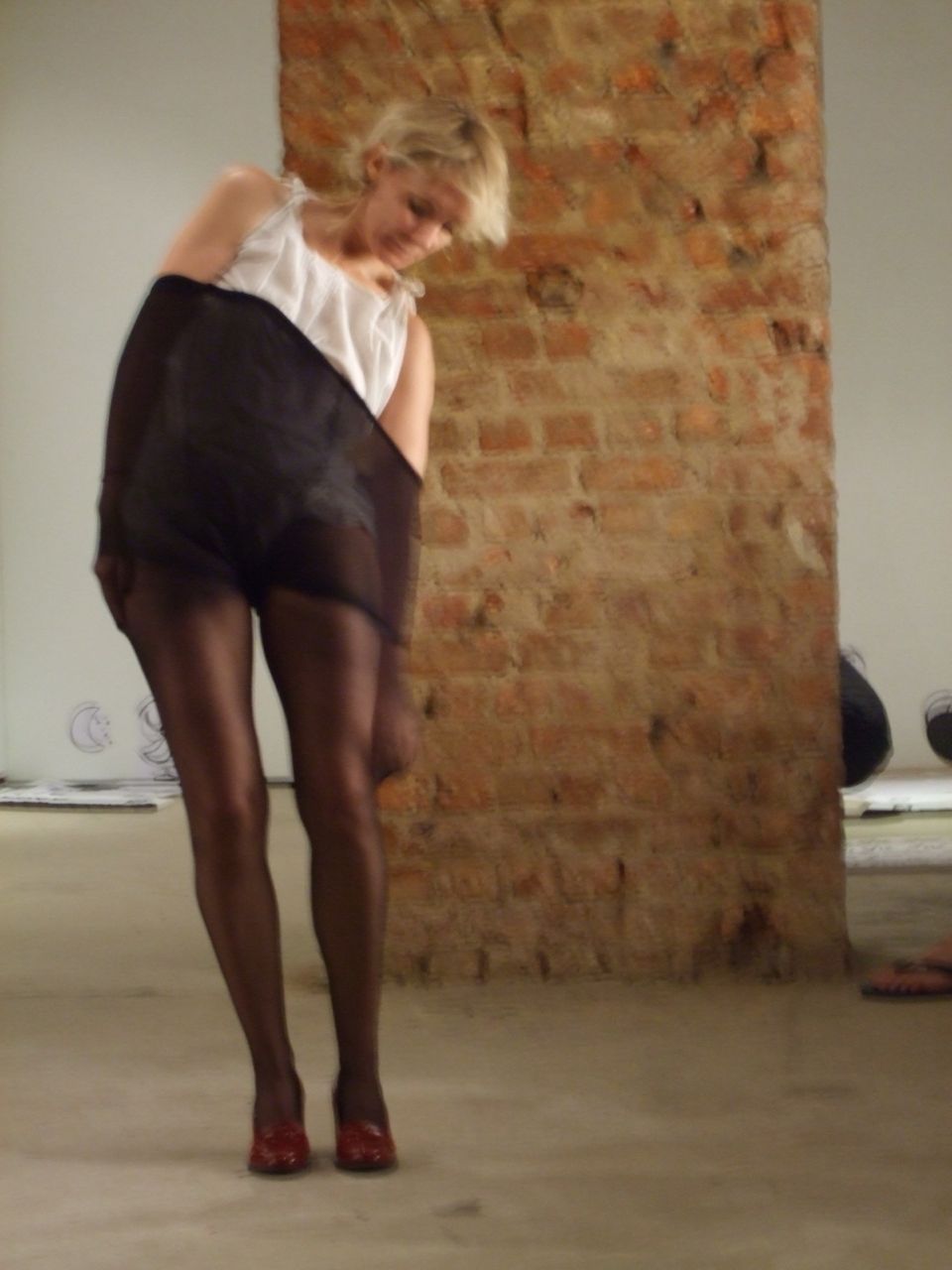
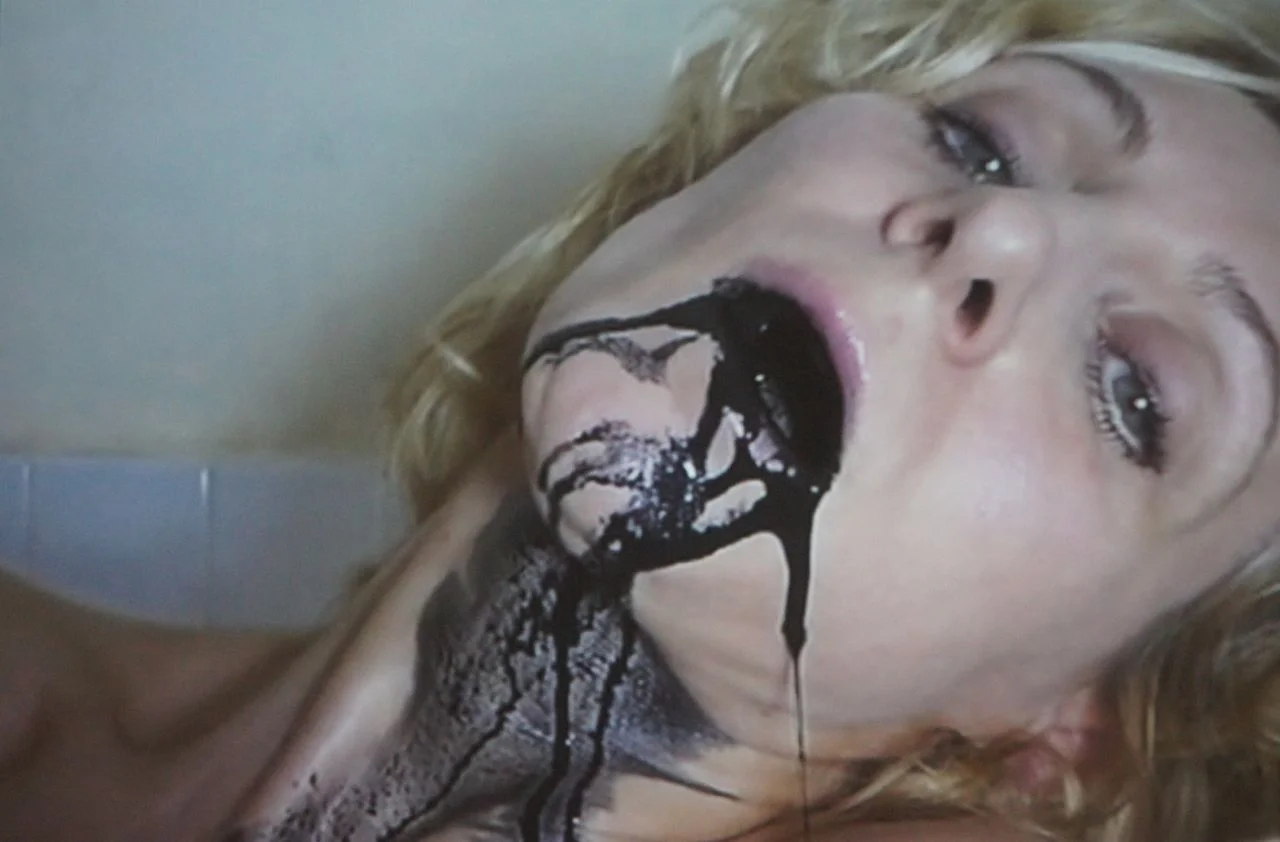
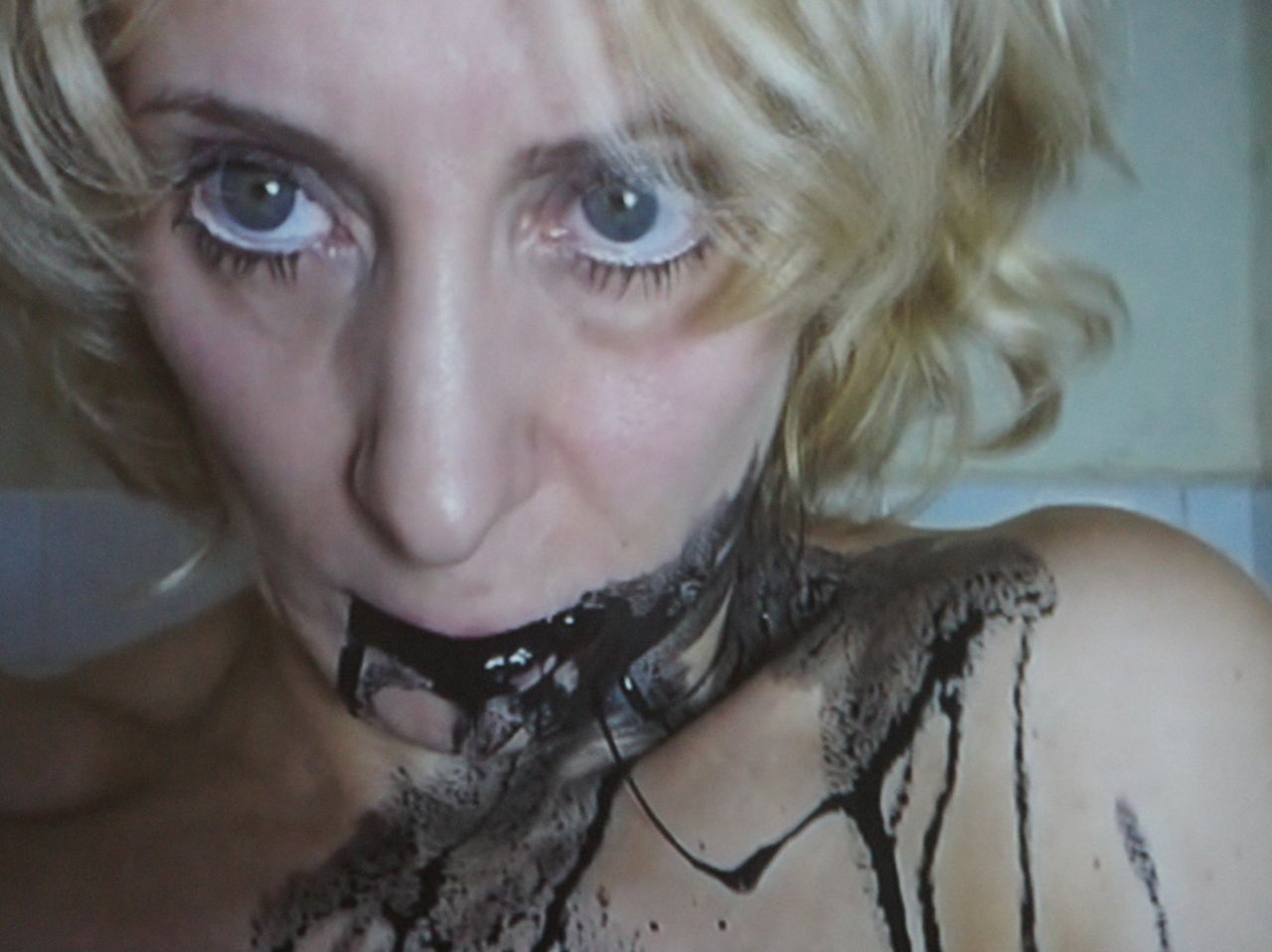
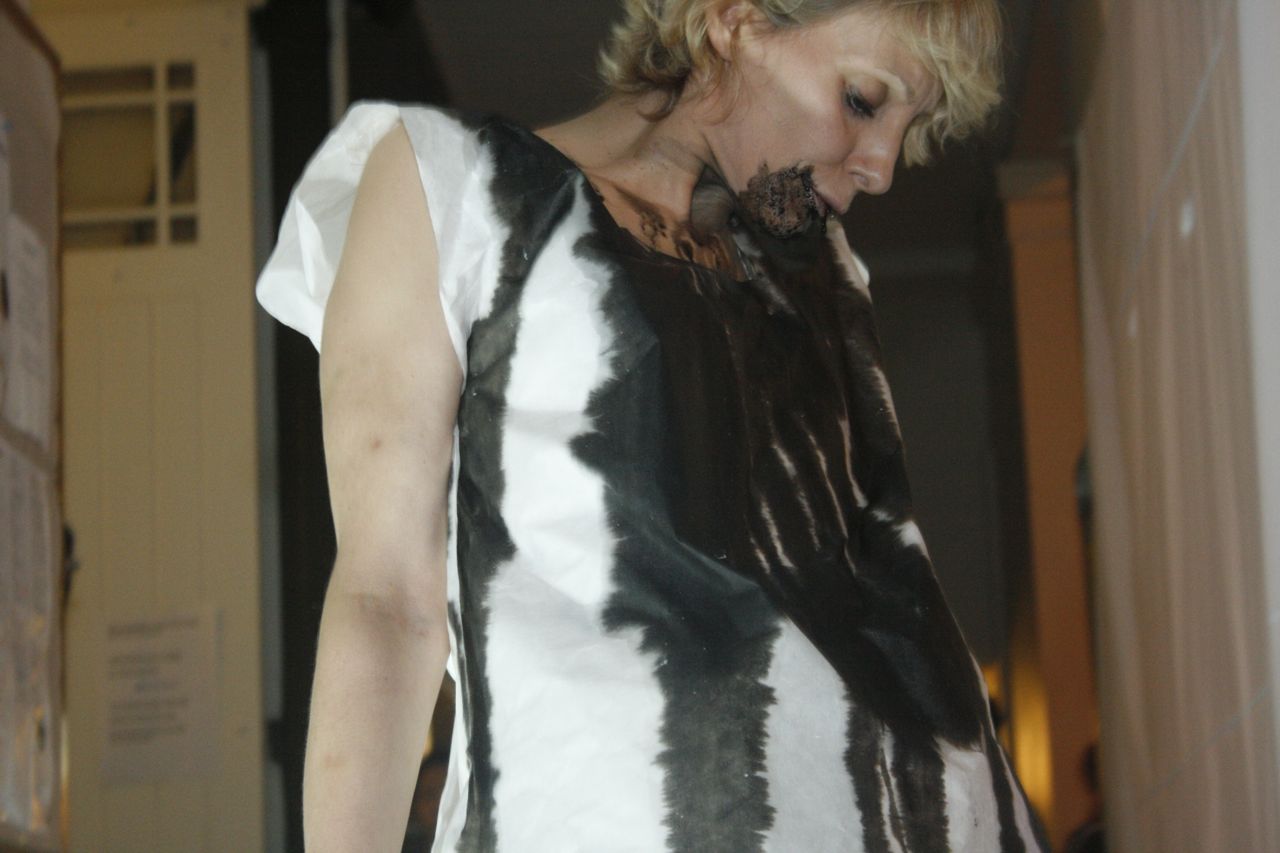
White dresses are ever-present in my work. They are dressing me, inhabiting me through my performances and installations.
We spend most of our lives dressed. Clothes shield us as we eat, sleep, work, and return home. Over time, they become a second skin — absorbing traces of our lives through scent, stains, and the marks of wear. They hold memories, both intimate and invisible.
In the attic of my parents’ house, there is a box — my favorite one. Inside are belongings of my late grandmother: a small treasure chest filled with her undergarments. For the past few years, I have performed wearing them, as if, in doing so, I might bring her presence back into the world — allowing her memory to breathe again through my body.
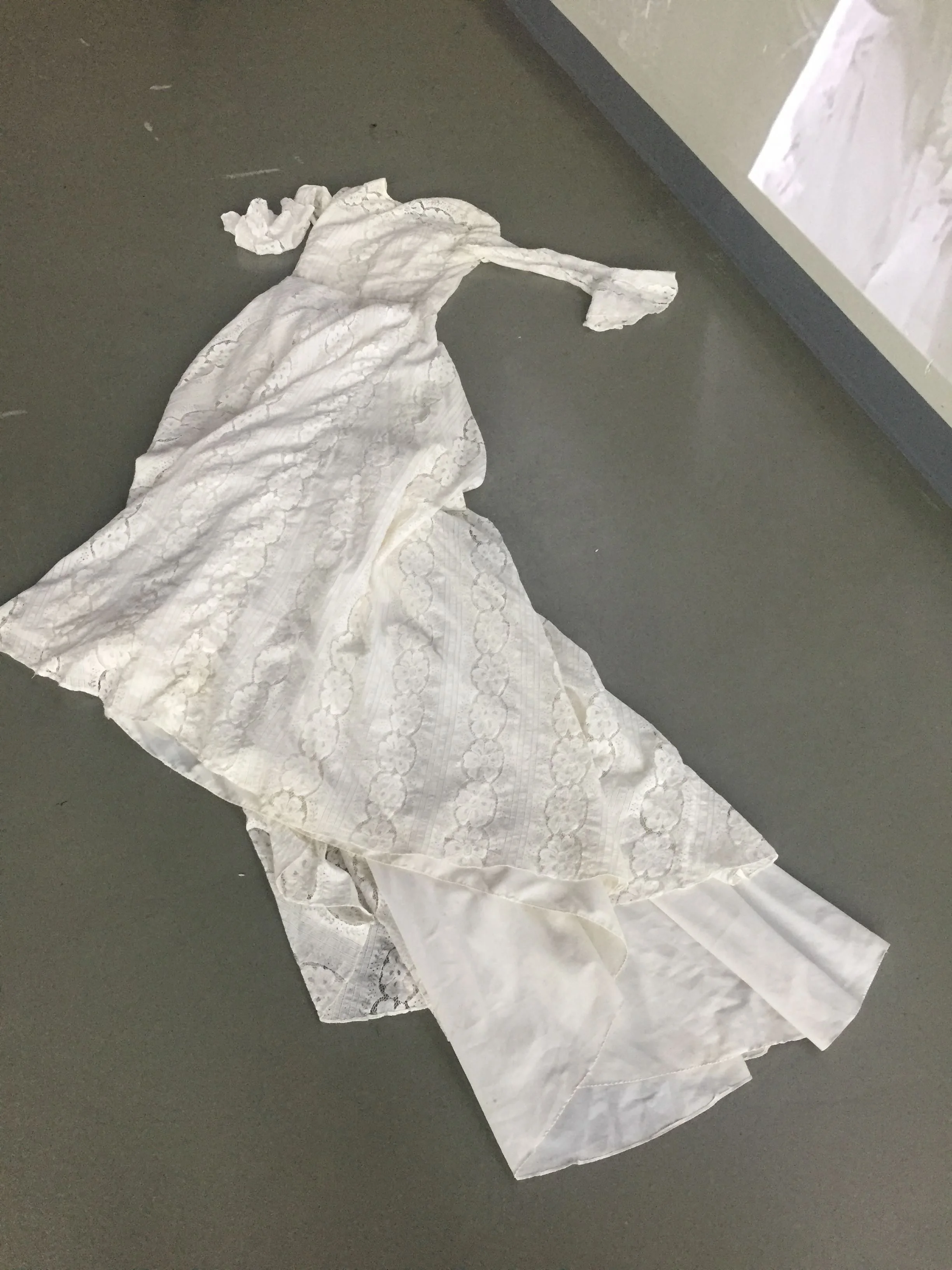
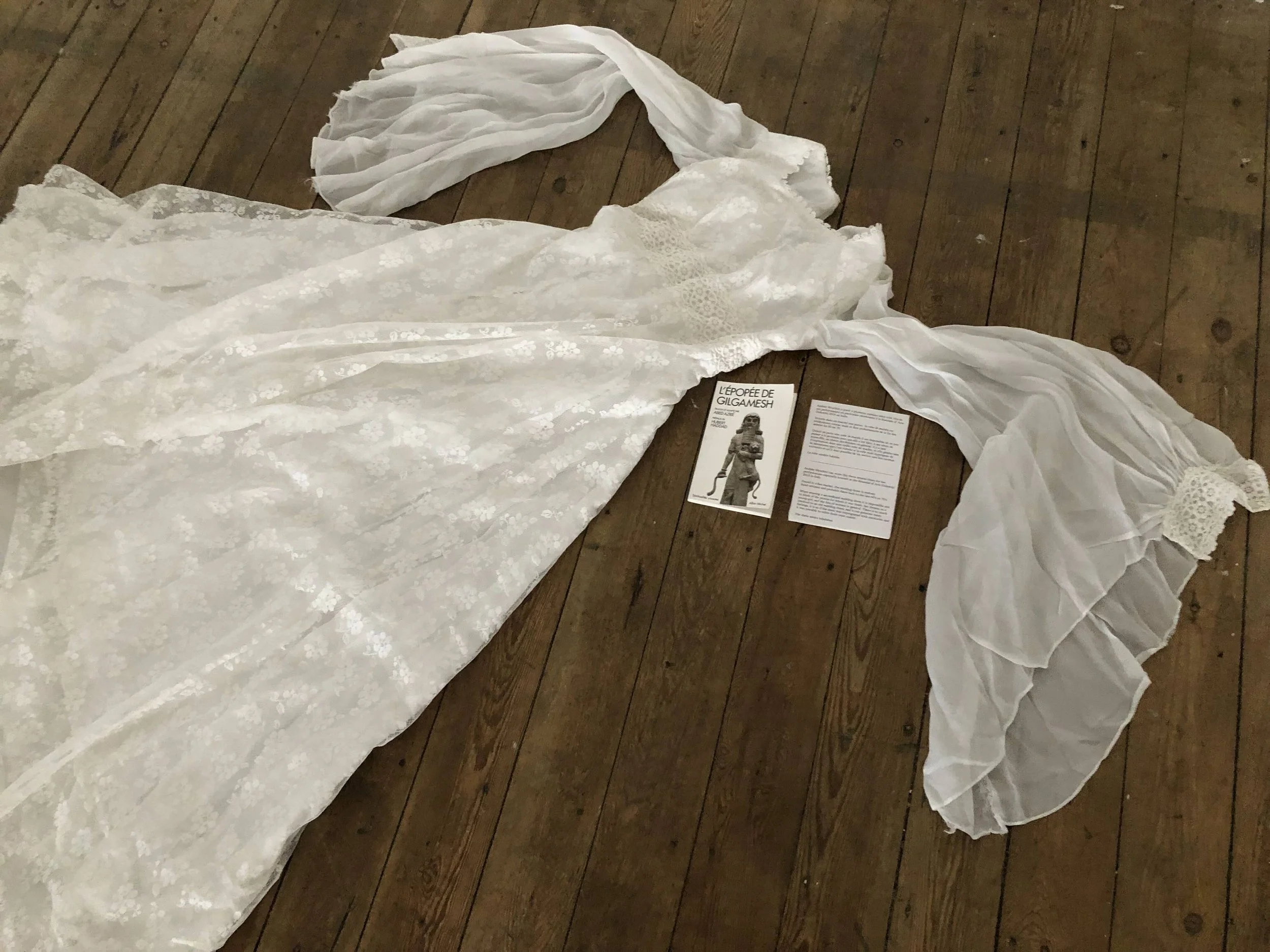
I have also performed in several wedding dresses. The first one I found at a flea market — entirely hand-stitched, dating back to the late 1970s. I wore it again and again, until it eventually tore apart after many performances. I then replaced it with others, each one more special than the last.
As I put on a second-hand wedding dress, I cannot help but think of the woman it was made for — her youthful dreams, her hopes, her life as it unfolded. An old wedding dress carries so much within it. It stirs questions and emotions: Who was she? Did these stains come from dancing all night? And why, of all people, did I end up with her dress? Where did those long held expectations go and do I carry them now on my body? How much can I, and how should I.